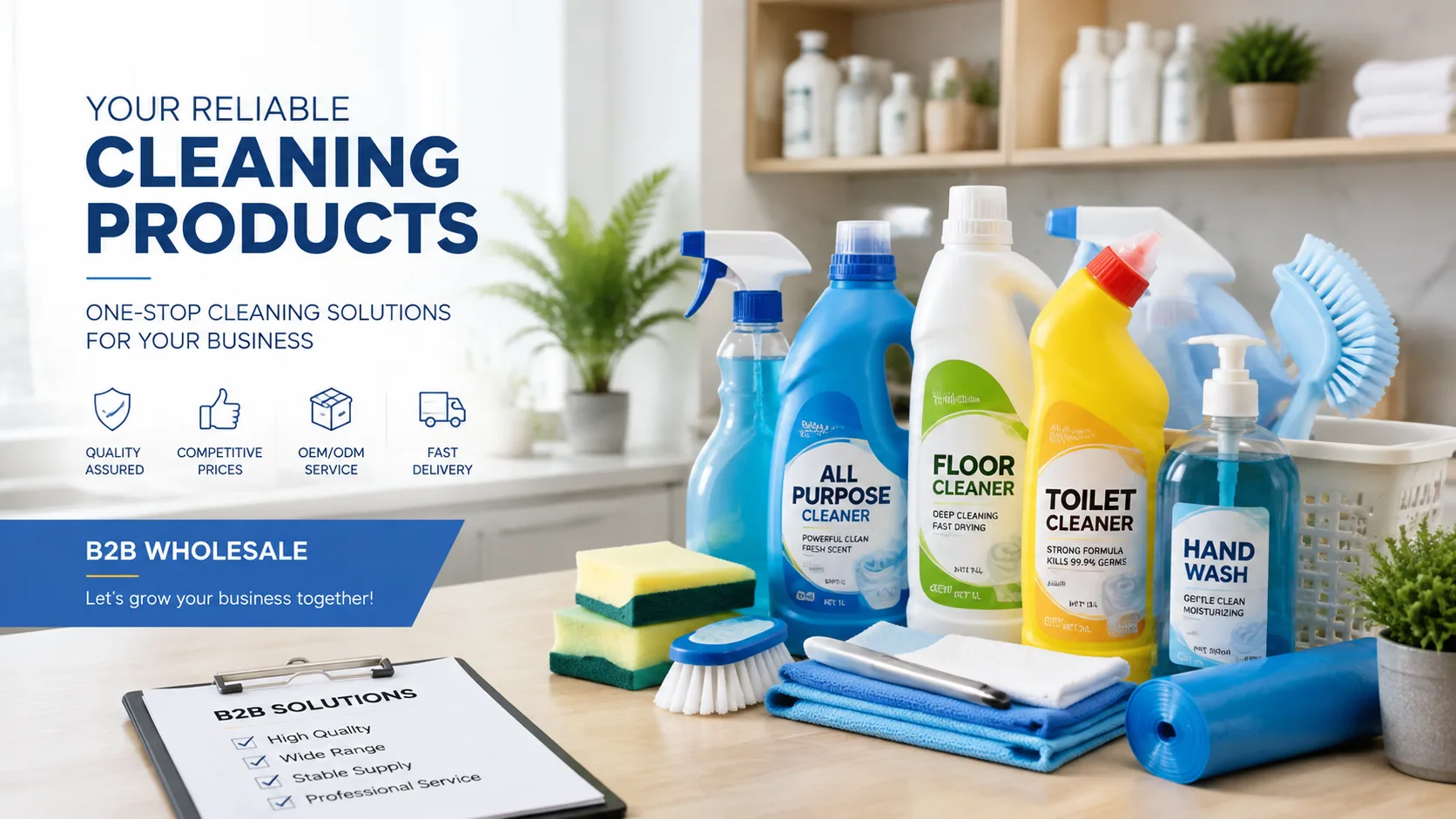
Supplier catalogues are usually organised around the factory floor: liquids in one section, wipes in another, aerosols somewhere else. Buyers do not shop that way. They shop by what a product sits next to on a shelf.
That gap costs both sides time. A buyer hunting for a bathroom cleaner has to translate “hard surface liquids” back into a shelf position, and a supplier wondering why a promising enquiry went quiet has usually lost it at exactly that step.
What follows is the map we draw in a first call: the four categories that come up in almost every household cleaning brief, and what each one changes about the order.
—
The four categories buyers actually search in
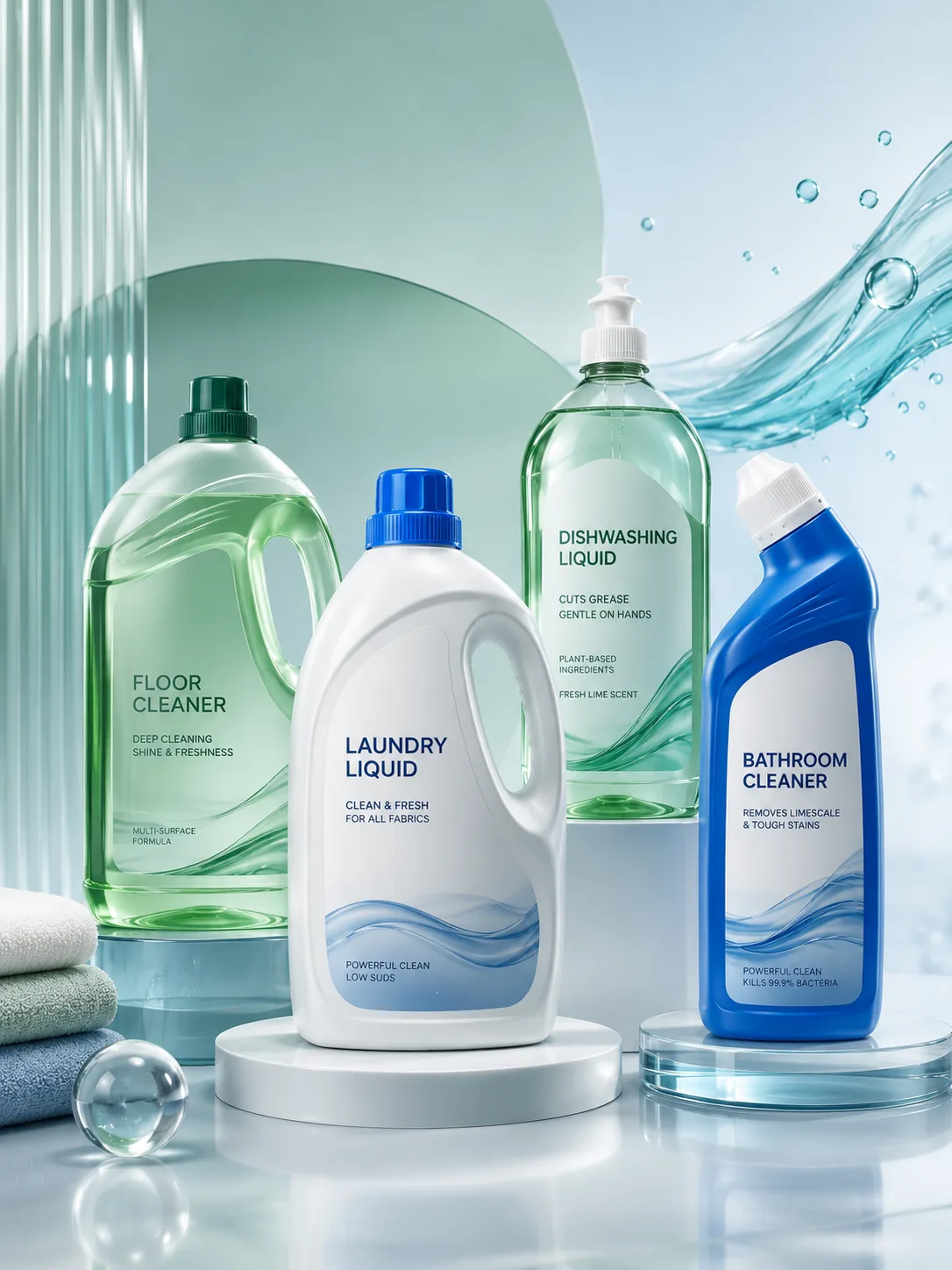
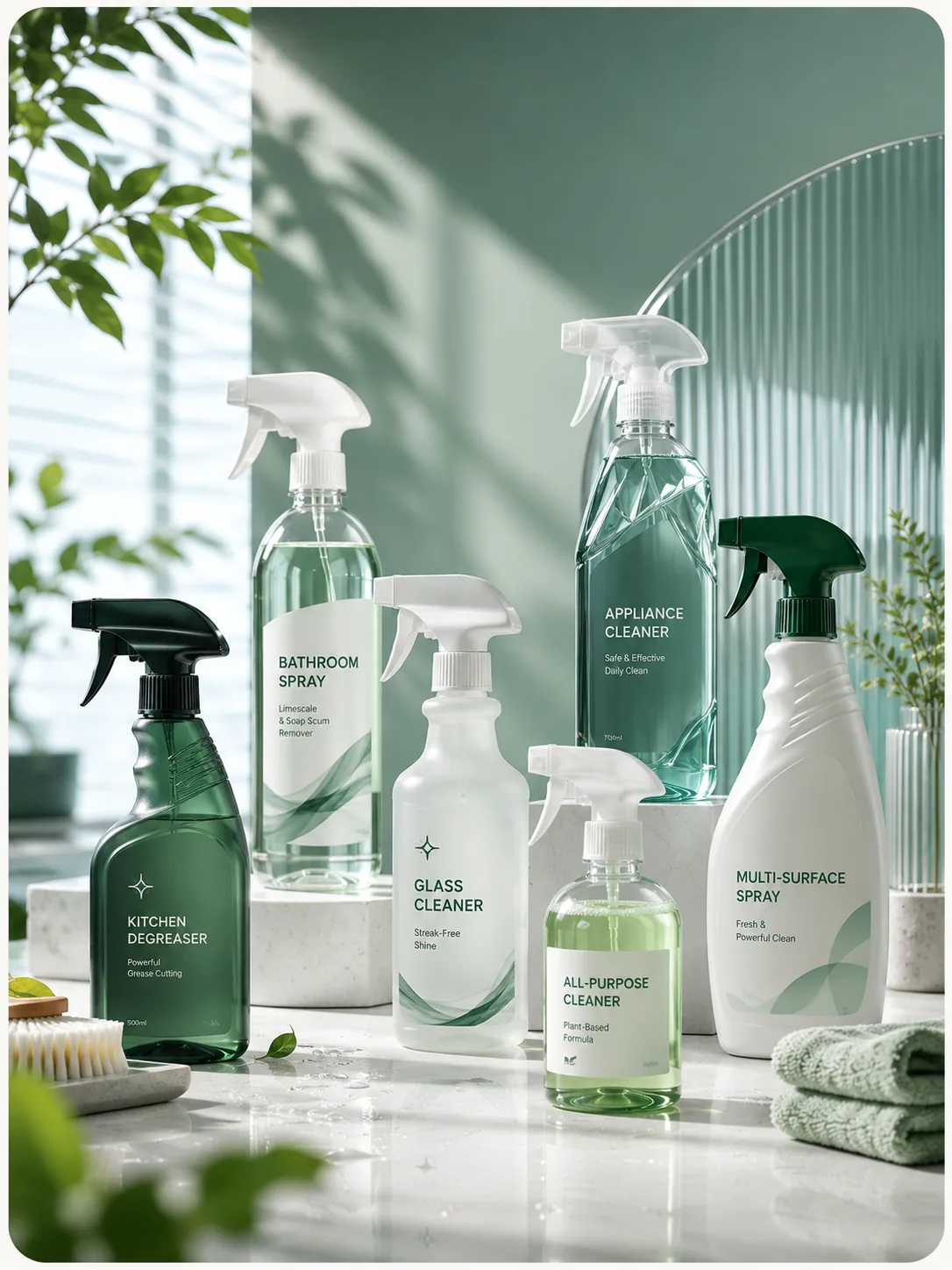
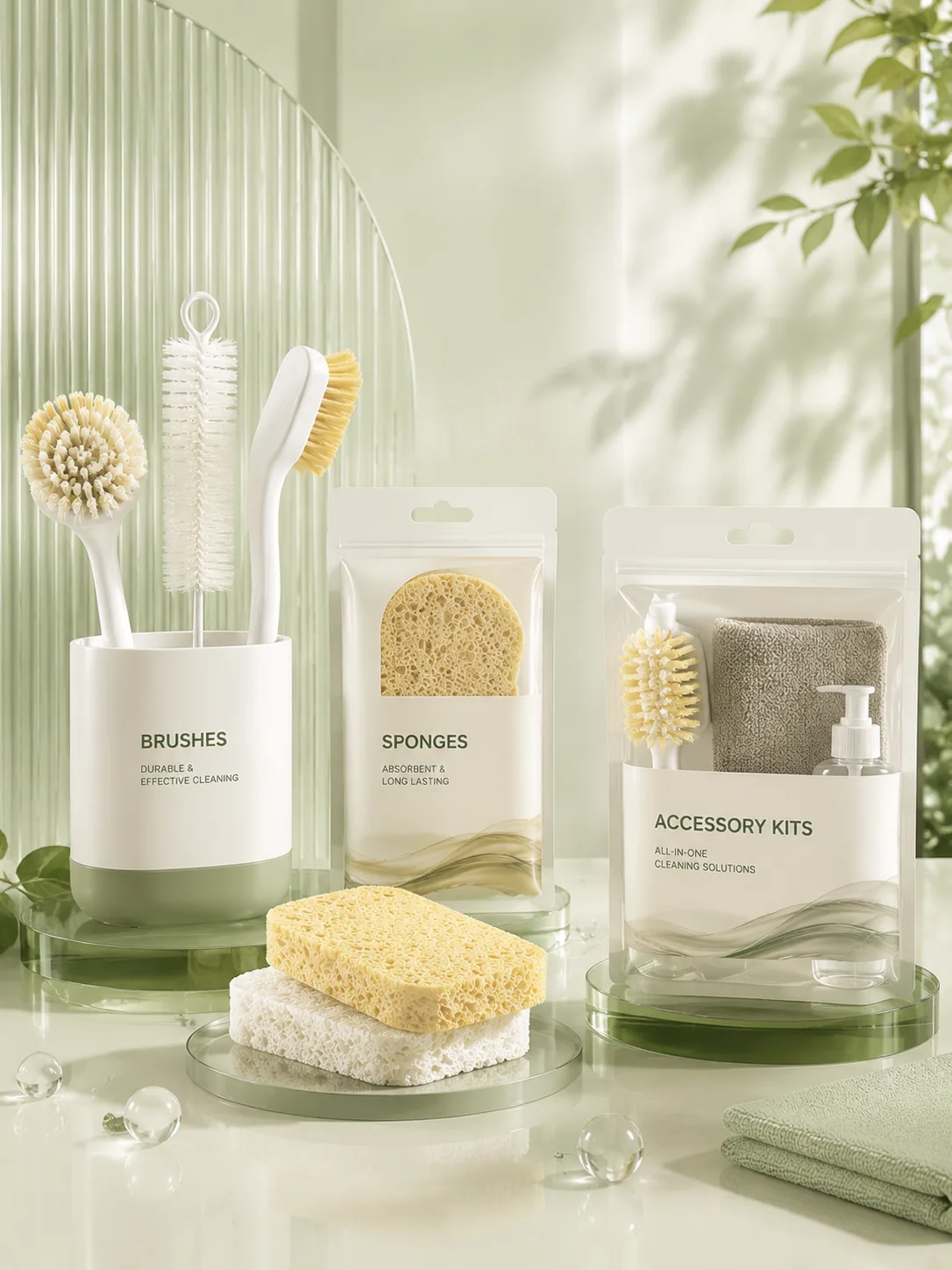
Surface care is where most private label programmes start. Multi-purpose sprays, bathroom and kitchen cleaners, floor cleaners, glass cleaners.
It is the widest category and the cheapest to enter: high SKU counts, low unit prices, and formulations that can be sampled in days rather than months. It is also the most crowded, which is why differentiation usually has to come from fragrance, pack format or claim rather than from chemistry.
Laundry and fabric care carries the heaviest formulation risk. Detergents, fabric softeners, stain removers, washing machine cleaner wipes.
Surfactant systems have to stay stable across water hardness, temperature and storage time, and several markets restrict phosphates and particular surfactant classes outright. A formulation that tests well in one market can fail another for reasons that have nothing to do with cleaning performance.
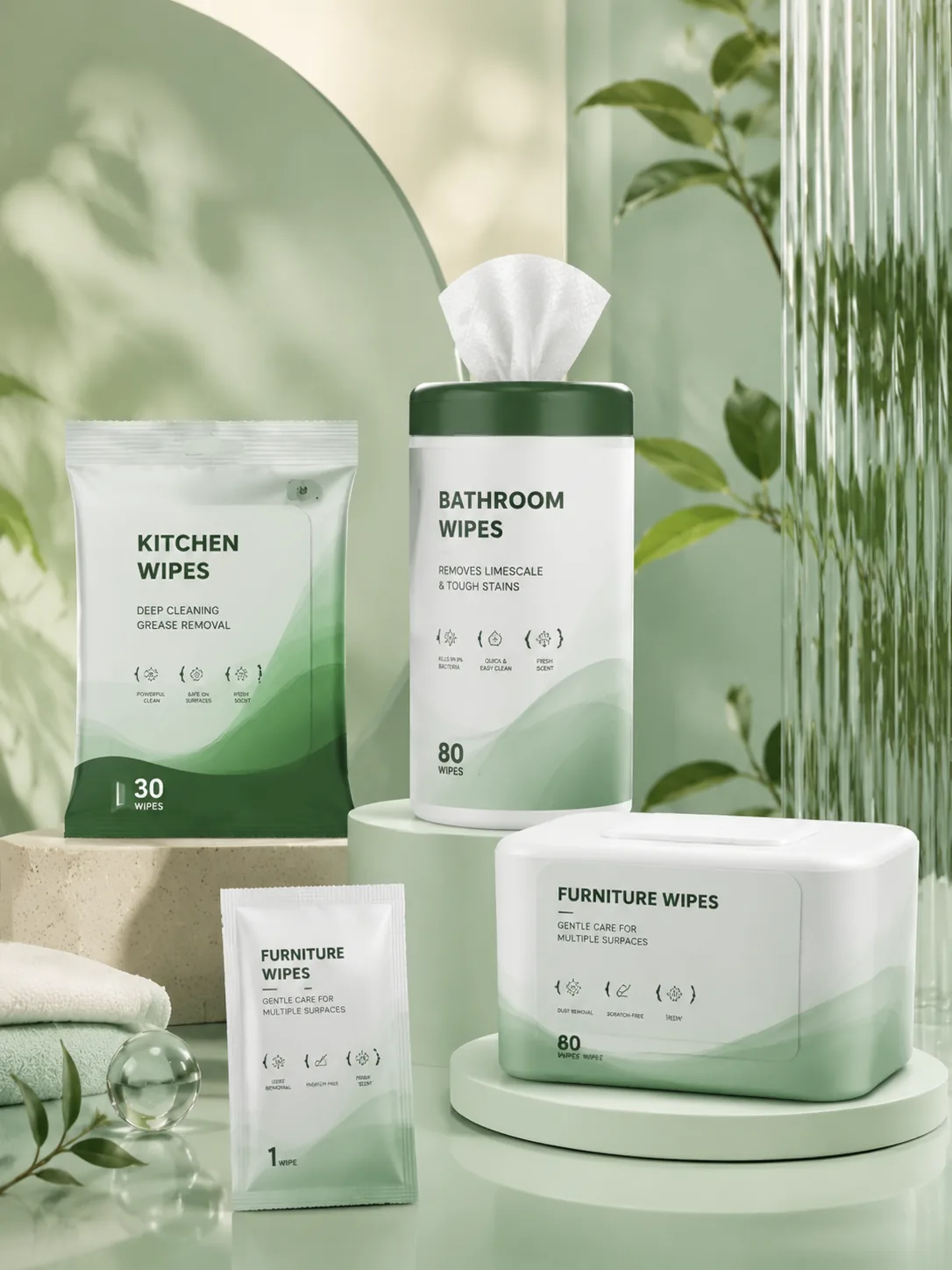
Kitchen and food-contact products sit closest to compliance. Dish soap, degreasers, surface sanitisers, food-contact wipes.
The closer a product gets to food, the more the paperwork matters: residue limits, food-contact declarations, and in the EU the biocidal products framework for anything carrying a sanitising claim. This is the category where a buyer should ask for documents before asking for a price.
Air and appliance care is the smallest category and the fastest moving. Air conditioner cleaners, washing machine cleaners, filter treatments.
It has grown because the installed base of split air conditioners in warm markets keeps expanding while routine servicing stays informal. A private label range here competes with very little on shelf, which is why it keeps appearing in briefs — the gap is visible. The commercial case is set out in air conditioner cleaning as a private label opportunity.
Category choice sets the sourcing route
The category you pick decides which of three routes you can actually take.
Stock products are the fastest route and need no tooling, but every competitor can buy the same item. Private label takes an existing formulation and puts your brand on it — the standard route for surface care and laundry, and the one we set out step by step in developing a private label cleaning product line.
Full OEM only makes sense where the category rewards a new formulation or a new pack. Air and appliance care is the usual candidate, because the products are still being defined.
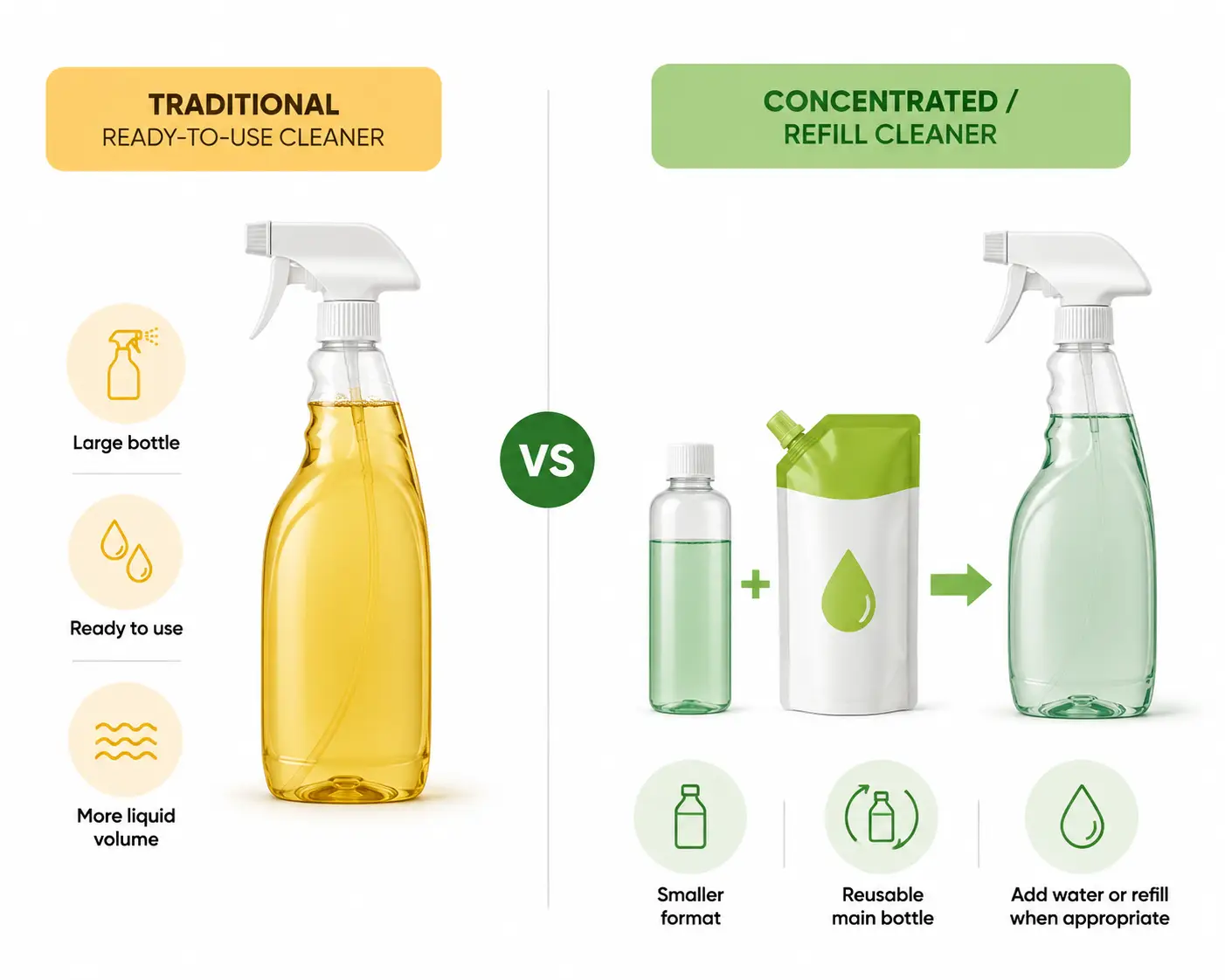
Packaging cost moves with category, not with order size. A trigger sprayer, a refill pouch and a soft-pack wipe each carry their own tooling, filling line and minimum quantity, which is why two orders of the same value can land at very different unit costs. The cost structure is broken down in household cleaning product packaging costs.
—
Where category decisions go wrong
Over-slicing. Twenty categories with two SKUs each look thorough on a website and are useless to a buyer. A distributor cannot build a planogram from them, and a private label brand cannot tell which gap it is filling. Fewer, deeper categories outperform a wide shallow tree almost every time.
Category and packaging planned separately. A category decision that ignores pack format tends to surface two years later as a compliance problem. Our PPWR packaging compliance guide covers the part of this that has already started to bite in the EU.
Certification assumed rather than confirmed. “Food safe” and “sanitising” are claims, not descriptions. If the category depends on either, the supplier has to produce the declaration before the first sample ships, not after the first order.
Using this map
Start from the shelf, not from the catalogue. Decide which shelf position you are buying for, then work backwards to the formulation and the pack.
Timing belongs in the same decision. Chinese New Year shuts production for two to four weeks, so a category launch dated to a spring retail window has to be placed in the autumn. The dates are in planning household cleaning product orders around Chinese New Year.
If the brief spans more than one category, a single-supplier kit is usually cheaper than coordinating three. That is the argument in one-stop cleaning kits, and the reason appliance care keeps being bundled into surface care ranges.
BIKI Home Care builds household cleaning ranges across all four categories, from stock to full OEM, at our own plant in Guangdong. If you are at the stage of deciding which category to enter rather than which product to buy, that is the conversation worth having first. Buyers in Guangzhou for the Beauty Expo can also arrange a factory visit in Zhongshan, as set out in our Guangzhou Beauty Expo note.
Send us the shelf position, the target market and the price band. We will come back with the categories that fit, the pack formats available in each, and the realistic first order quantity.
Contact BIKI Home Care
Contact person: Derek
Tel: +86 134 2455 2511
Factory address: Area A, No. 37 Chigang Road, Xiaolan Town, Zhongshan City, Guangdong Province, China