

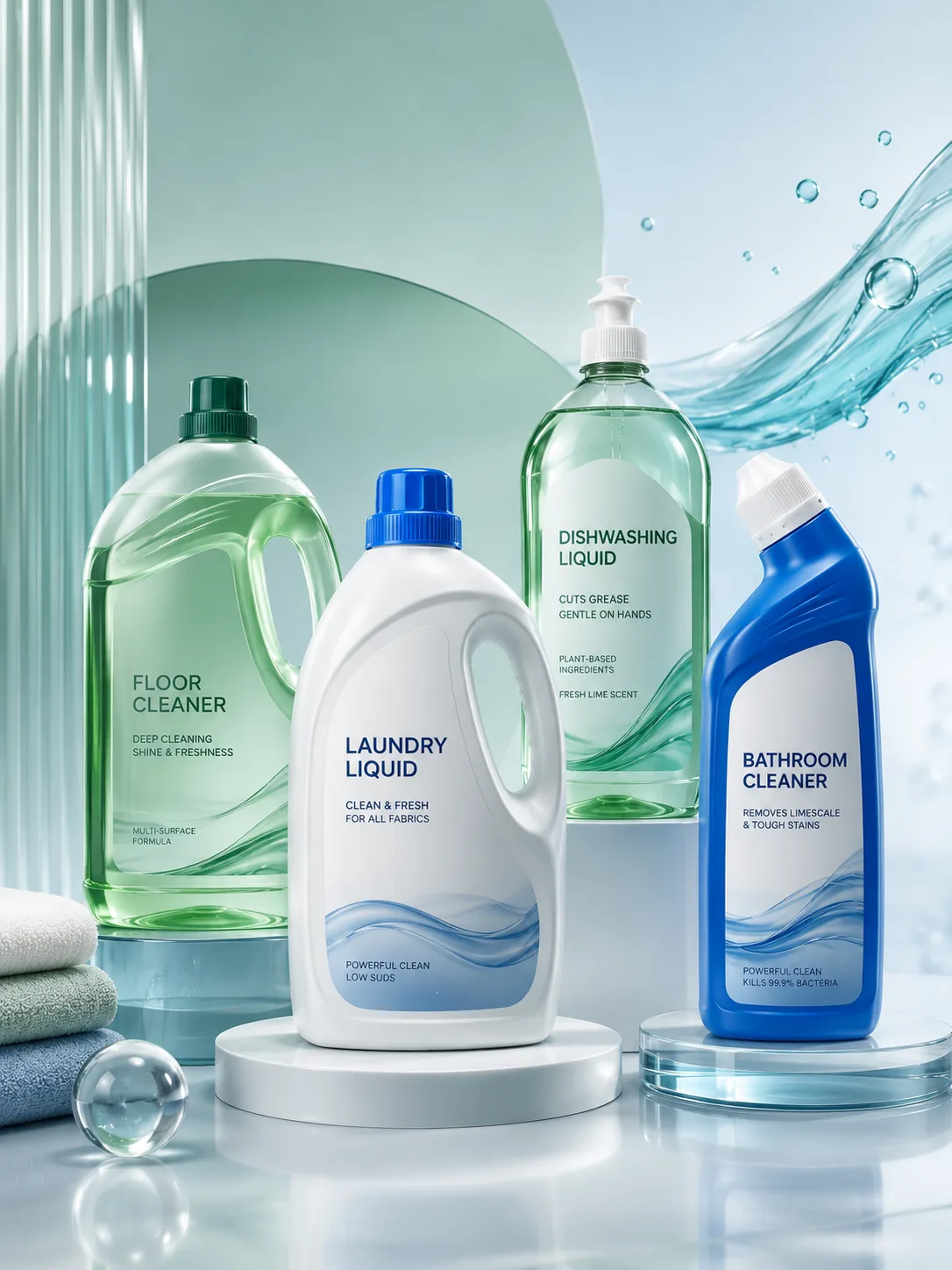






Seven US states now have packaging extended producer responsibility laws on the books. In one of them, producers start receiving invoices in January 2027.
The invoice is not based on what you sell. It is based on what your packaging weighs, component by component, material by material.
That number has to come from your supplier, and most specification sheets do not contain it.
The gap between an audit-ready packaging weight and the word “approx.” on a spec sheet is now a line item on a bill. Closing it is a documentation decision, not a manufacturing one.
—
What Changed This Month in California
California is the state to watch right now, because its program moves from regulation to invoicing in the next ten weeks.
The permanent regulations were approved and filed on May 1, 2026. Circular Action Alliance, the approved producer responsibility organization, submitted its producer responsibility plan to CalRecycle on October 13, 2026, and CalRecycle has 75 days to review it for compliance.
Public comment on that plan runs through November 13, 2026.
The practical date is January 1, 2027. That is when producers are expected to receive their first invoices, calculated against 2025 supply data and the 2027 rate schedule.
If your product goes into California under your own brand, the 2027 invoice is already being calculated from data you supplied, or failed to supply.
The rate schedule itself is published per pound by material category. Flexible plastic film sits at the top of it, paper sits near the bottom, and packaging with verified post-consumer recycled content earns a credit against the fee. The exact rates are set by the producer responsibility organization and published separately — read the current schedule rather than a number quoted in an article, including this one.
California is not the only jurisdiction moving in this direction. The EU’s packaging regulation asks a related set of questions, though on a different timetable and with a different legal basis — our PPWR packaging compliance guide sets out what that one requires. A brand selling into both markets ends up building one component-level data set and reporting it twice.
—
Seven States, Three Different Clocks
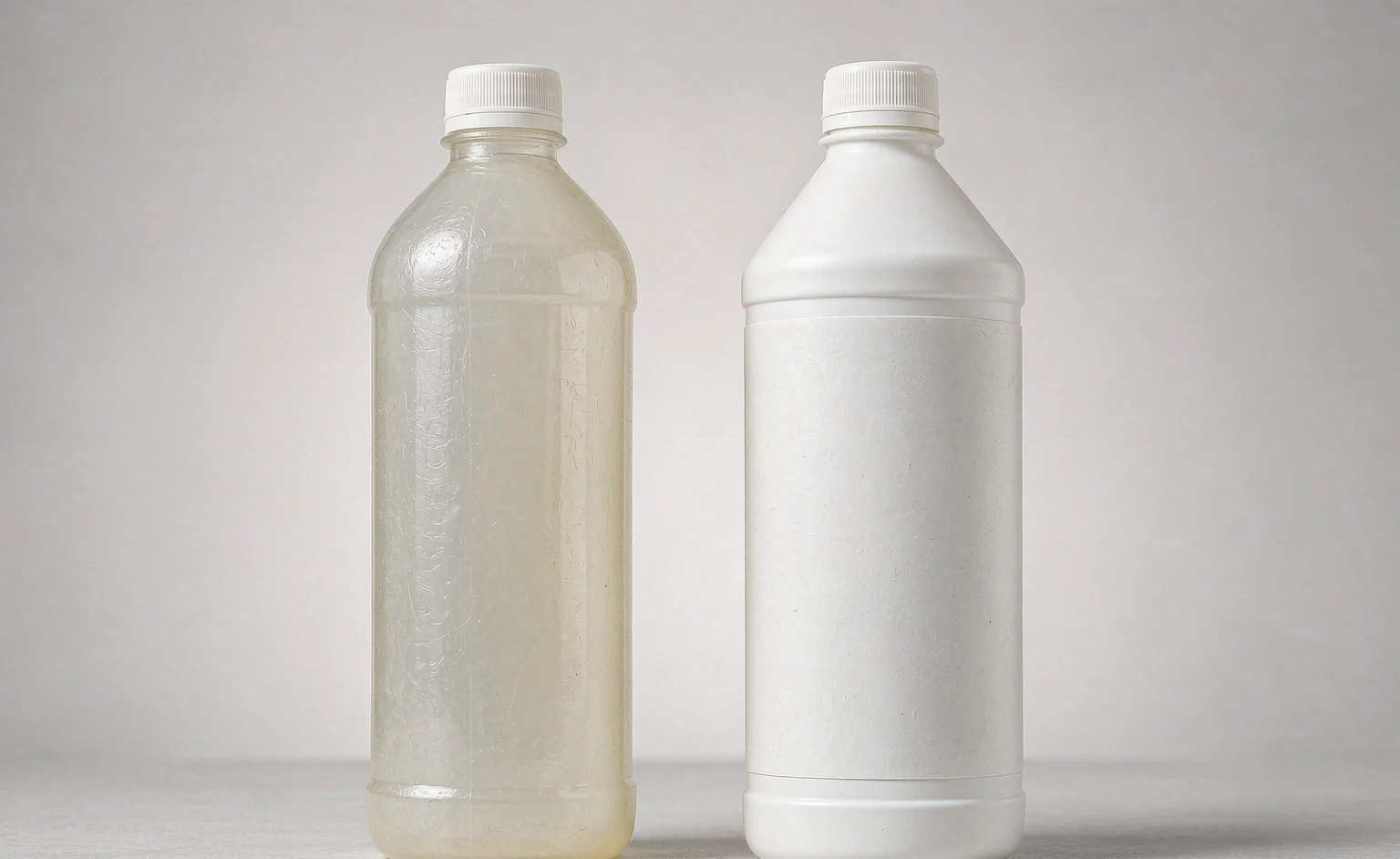
The seven states are not one program with seven logos. They are at three different stages, and the reporting obligation usually arrives before the fee.
| State | Status in late 2026 | Fee timing |
|---|---|---|
| Oregon | Invoicing under way | Since July 2025 |
| Colorado | Invoicing under way | Under way, with a flat dues option for small producers |
| California | Plan under review, comments open to November 13 | First invoices expected January 1, 2027 |
| Maryland | Registration and first report closed May 31, 2026 | From July 2028 |
| Minnesota | Simplified report due annually from May 31, 2026 | From February 2029 |
| Washington | Registration closed February 15, 2026; PRO membership required | Ramping from 2029 to 2030 |
| Maine | No producer responsibility organization selected | Not set |
Two things follow from that table.
First, reporting starts before fees do. Maryland, Minnesota and Washington already require supply data. A brand that waits for the first invoice to build a data set is already two reporting cycles behind.
Second, the data you report is the same shape in every state. Material type, component weight, units placed on market, recyclability attribute. The states differ in thresholds and timing, not in what they need to know. One clean data set can serve all seven.
Maine is the outlier. Its law was the first in the country, passed in 2021, but its stewardship organization procurement produced no viable bids in August 2026, and the state is reassessing the schedule. Nothing is actionable there yet.
—
What a Producer Report Actually Asks For

A producer report is a bill of materials, not a product list. The unit of reporting is the component, not the SKU.
That distinction is where most first-year reporting fails.
A SKU is a sellable item: a 750 ml floor cleaner, say. A component is each separate piece of material that goes into the market with it: the bottle, the cap, the label, the neck seal, the carton, the shrink film holding a multipack together.
Each of those is a different material, and each is priced differently. Reporting “one 750 ml floor cleaner, 1.2 kg” answers none of the questions the program is asking. The same component logic applies to any format in a private label range, which is why the five laundry liquid bottle formats produce five different reporting records from one product family.
Three reporting formats exist, and the states rank them by precision:
SKU-specific bills of materials are the preferred format. Every component of every SKU, with measured weight and material.
Average bills of materials are accepted as a temporary measure. One average pack per product family.
Apportionment spreads weight across a portfolio using estimates. Also temporary.
The word “temporary” is doing a lot of work in those descriptions. Programs that accept an average today are building the baseline against which your future reduction is measured. An inflated baseline is a fee you pay every year until it is corrected.
—
The Second California Metric Nobody Plans For
California tracks two numbers, not one: plastic weight and the number of plastic components.
This is the part of the law that catches packaging engineers who are used to thinking in grams.
Weight reduction and component reduction are separate obligations with separate targets. A pack can get lighter without getting simpler, and the program sees the difference.
The clearest example is a shrink-wrapped multipack. Reducing the film thickness lowers the plastic weight. It does not change the fact that the film is still a plastic component, and the component count stays where it was.
To reduce the component count, a plastic part has to disappear entirely. Remove the shrink band. Replace a plastic window in a paperboard carton. Consolidate a two-piece closure into one. Move a polyester mailer to paper.
For household cleaning products, the components in play are usually the bottle, the closure, the label, a neck seal or tamper band, and any film used in multipacks or tray wrapping. A label is a component. A tamper band is a component.
Wipes make the point cleanly. A canister and a soft pack do the same shelf job, but the canister carries a rigid tub and a hinged lid while the soft pack carries film, a label and usually a reclosure strip. Same category, different component count — a comparison we set out in the private label cleaning wipes guide.
If your supplier’s specification lists four parts and your pack actually has six, you are under-reporting components, not over-reporting weight. The exposure is on the count, not the mass.
—
Why Your Spec Sheet Says Approx.
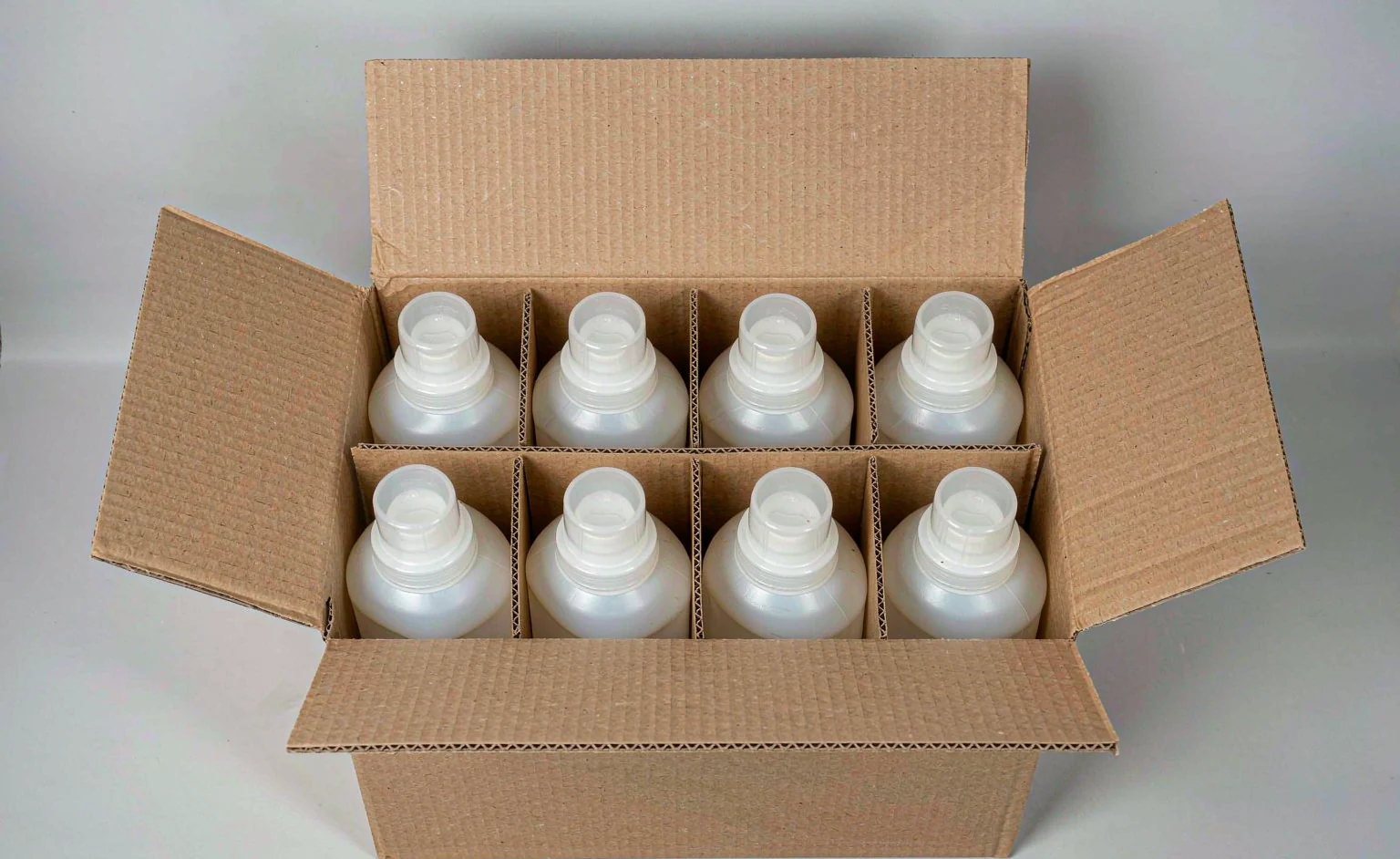
Most specification sheets are written to sell a product, not to file a return.
A typical private label spec sheet answers the questions a buyer asks before placing an order: capacity, material, closure type, label finish, carton quantity, gross weight per carton.
Those are commercial questions. None of them is a component weight.
Carton gross weight is the number most often mistaken for compliance data. It is the total mass of bottles, product, labels and the carton itself, divided across the units inside. It cannot be decomposed into per-component figures after the fact, because the split between bottle, closure and label was never recorded.
“Approx.” is not a rounding convention. It is a statement that no one measured it.
There are three legitimate sources for a component weight, and they are not equivalent:
- A measured weight from a calibrated scale, recorded per component and per material
- A theoretical weight calculated from wall thickness, dimensions and resin density
- A supplier datasheet value, which is usually a nominal figure with a tolerance
For EPR reporting, only the first survives an audit. The second is a design tool. The third is a starting point.
It is worth separating two questions that sound the same. What a pack costs to make and what it weighs are decided by the same set of choices — wall thickness, material, component count, closure design — but they are answered by different documents. The household cleaning product packaging costs side is a commercial negotiation. The weight side is a technical record. Suppliers are organized around the first and rarely asked for the second.
—
The Eight Fields a Supplier Has to Fill

Eight fields turn a product specification into a reporting-ready record. Ask for all eight, per component, per SKU.
| Field | What it has to say | Where it usually fails |
|---|---|---|
| Component name | Bottle, closure, label, neck seal, carton, film | Components are merged into “packaging” |
| Material and resin code | HDPE #2, PP #5, PET #1, paper, aluminum | “Plastic” is not a material |
| Measured weight per component | Grams, from a calibrated scale | Nominal or theoretical value substituted |
| Components per unit | Count, including closures and seals | Seals and tamper bands omitted |
| Units per SKU placed on market | Per state, per reporting year | Only total shipments recorded |
| Packaging category | Primary, secondary or tertiary | Grouped transport packaging mixed in |
| Recyclability attribute | Per the state’s covered material category list | Assumed from material, not from the list |
| Post-consumer recycled content | Percentage, with a verification route | Claimed without documentation |
The first four fields come from the pack. The last four come from the commercial record. A supplier can provide the first four. The brand owner usually holds the last four, because units placed on market per state is a sales question, not a production one.
That split is worth being explicit about in a supplier agreement, because it is where responsibility quietly defaults to whoever did not ask.
—
Downgauging Reduces Weight, Not Components
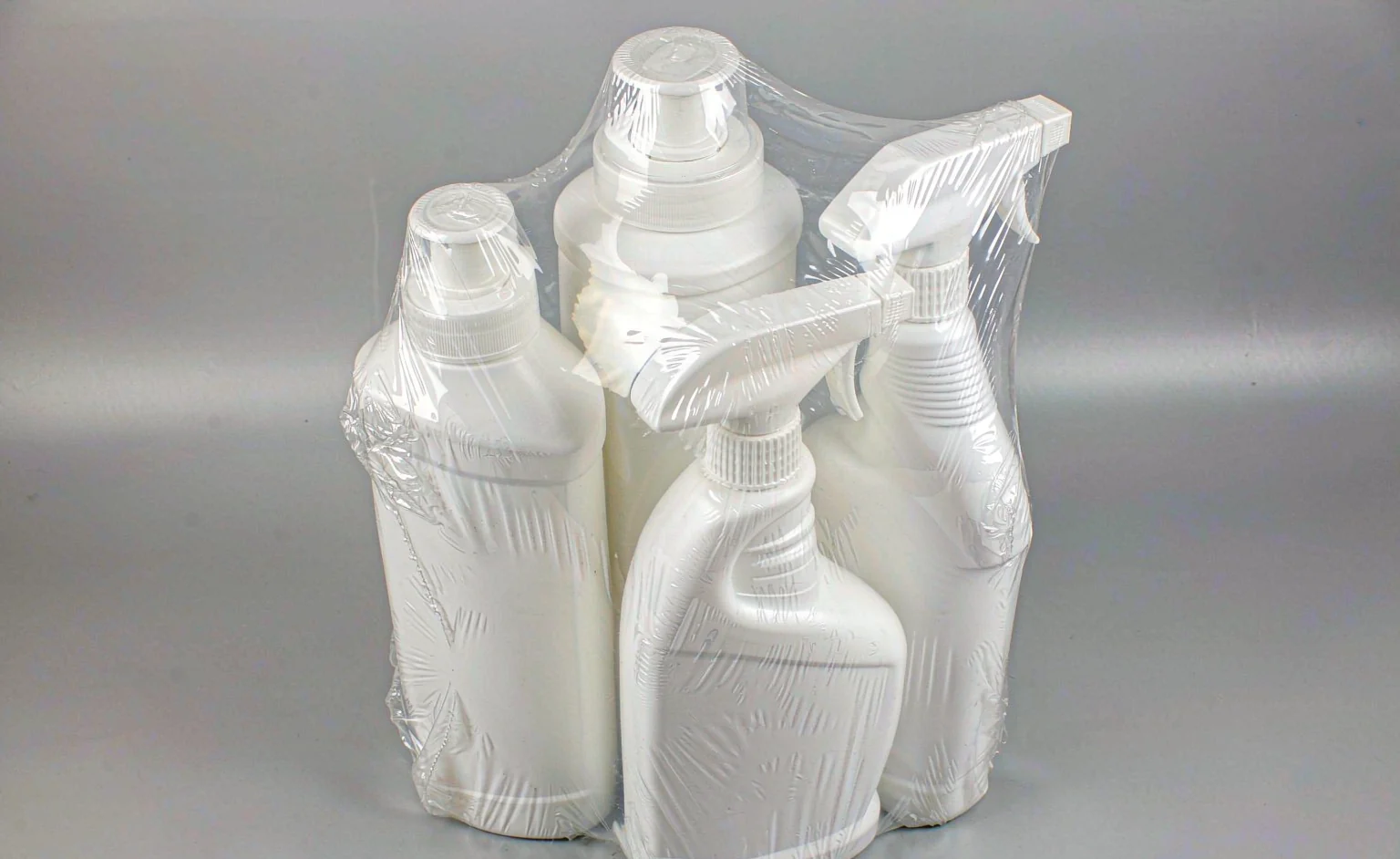
Lightweighting is the cheapest lever and the one most likely to be over-credited.
A thinner bottle wall, a thinner film, a lighter closure — all of these reduce weight, and weight is what most of the fee is based on. In the four states without a component metric, lightweighting is close to a complete answer.
In California it is half an answer.
The trap is a project that reports a 12 percent weight reduction and treats the component obligation as solved. The component count did not move. If the program’s reduction target is expressed in both metrics, the second one is still unmet.
Sequence the work in this order: remove a component first, then lightweight what remains. Removing a part reduces both numbers at once. Lightweighting only ever reduces one.
For a household cleaning pack, the components that can realistically be removed or consolidated:
- A tamper band that can be replaced by a closure with an integrated seal
- A full-wrap sleeve label on a bottle that could take a pressure-sensitive label
- A shrink band on a multipack that could be replaced by a paperboard cluster
- A plastic window in a carton that could be eliminated or replaced with an open cut-out
- A two-piece closure consolidated into a single part
Each of those changes a print run, a filling line setting or a carton specification. None of them is free, and the fee saving is usually smaller than the changeover cost in year one. The case for doing it is the multi-year trajectory, not the first invoice.
Refill formats are the most direct route to a lower weight per wash, and the difference is structural rather than cosmetic. A refill pouch carries the product in film instead of a rigid container, so the plastic weight per litre falls sharply and the component list changes shape. The same logic applies to a refill bottle used across repeated purchases rather than a new container each time.
—
How to Ask for Measured Weights
The request is small and specific. It is also the one most likely to be answered with a brochure.
Ask for a component-level weight table per SKU, with the material named and the weighing method stated. Ask whether the figure is measured, theoretical or taken from a component supplier’s datasheet.
Three questions separate a real answer from a restatement:
- Which components are included in this total, and which are excluded
- Whether the closure and any tamper band are counted separately
- Whether the label is counted by its own weight or absorbed into the bottle figure
A supplier that cannot answer those three questions does not have the data, whatever the spec sheet says.
There is a second request worth making at the same time: ask for the same table in a spreadsheet with one row per component. A PDF specification is a document. A row-per-component table is a data set, and it is the difference between a report that takes an afternoon and one that takes a quarter.
The cheapest moment to build that table is before the first production run. Once a pack is approved and running, the data has to be reconstructed from samples and component invoices. A new range should carry the table from the first specification round, as part of the private label product development process rather than as a compliance afterthought.
—
US packaging EPR: common questions
What packaging weight data do I need from my supplier to report under US state EPR laws?
A component-level table per SKU: component name, material and resin code, measured weight in grams, components per unit, and packaging category. You also need units placed on market per state, which is a sales figure rather than a supplier figure. Carton gross weight is not a substitute for any of it.
For private label cleaning products sold in California, does the brand owner or the importer pay the packaging EPR fee?
It depends on who is the producer under the state’s definition, which generally turns on who puts the product on the market in that state under their own brand. A private label brand selling under its own name is usually the producer. An importer distributing another company’s brand may or may not be. The definition is state-specific and worth confirming with the state program or counsel rather than assuming.
How do I get accurate bottle, cap and label weights per SKU from a Chinese OEM instead of estimates?
Ask for measured weights with the weighing method stated, and ask which components the figure includes. Request the data as a spreadsheet with one row per component rather than a PDF specification. A supplier that weighs components as part of its specification process can answer directly; one that copies a component supplier’s datasheet cannot.
Does making the bottle thinner reduce my EPR fee in California?
It reduces the weight-based portion. It does not change the number of plastic components, which California tracks as a separate metric. To reduce the component count, a plastic part has to be removed or consolidated, not made thinner.
Which states already require packaging supply reports?
Maryland, Minnesota and Washington have reporting obligations in place, and California, Colorado and Oregon have active programs. Maine has passed a law but has not yet selected a producer responsibility organization, so nothing is actionable there. Reporting deadlines have generally converged on May 31 each year.
—
Working With a Supplier on Packaging Data
At BIKI Home Care, we supply household cleaning products from Zhongshan, Guangdong, and issue the pack specification for every component — bottle, closure, label and carton. That specification is where a reporting-ready weight table starts, or where it fails to.
The useful first conversation is not about the fee. It is about which components your pack actually contains, which of them you can name by material, and whether anyone has weighed them.
- Ask for the component list before the price list
- Ask which parts are counted and which are absorbed
- Ask for one row per component, in a spreadsheet
- Ask whether the figure is measured, theoretical or a datasheet value
Request a quote or review our OEM and ODM process to start the conversation. The liquid cleaners range covers the bottle and refill formats most affected by weight-based fees, and the factory overview sets out the production and quality system behind them.
BIKI Home Care · Zhongshan, Guangdong, China · Household cleaning products for private label, OEM and ODM programs.
—
Sources
CalRecycle, SB 54: Plastic Pollution Prevention and Packaging Producer Responsibility Act. Permanent regulations approved and filed May 1, 2026; Circular Action Alliance producer responsibility plan received October 13, 2026; 75-day review period; public comment open through November 13, 2026.
EcoEnclose, EPR packaging requirements. State-by-state status, fee timing, reporting format hierarchy, California dual metric on plastic weight and plastic component count, and exemption thresholds.
Wine Institute, EPR and bottle deposit laws. List of the seven states with enacted packaging EPR laws and the separate post-consumer recycled content laws in New Jersey and Washington.
Hogan Lovells, Extended producer responsibility for packaging in the United States. Key elements of the seven state laws, including the definition of producer and the reporting obligations.
Packgine, US packaging EPR overview. Current program status by state, including which programs are operating, which are in implementation, and the position in Maine.
Proskauer, The guide to EPR packaging compliance. Legislative overview of state packaging EPR laws.