
A cleaning product can pass a lab check and still arrive wrong. The formula may be stable while the trigger does not fit the bottle neck, or the carton may carry an old label version.
Importers, distributors, wholesalers and private label teams rarely see the production line. They see the approved sample, the specification and the shipment. Quality control is the link between those three. Across a cross-border supply chain, that link is easy to lose when formula, packaging, filling and transport records sit in separate files.
The useful question is not whether a factory says it has quality control. It is whether the buyer and manufacturer have agreed what will be checked, against which reference, and what happens when a check fails.
Where should a home care OEM buyer start?
—
Why cleaning product quality control starts with the specification
The practical takeaway: a sample is not a specification.
A sample shows what one version of a product looked and felt like on one day. It does not, by itself, tell the production team which details must stay within a set range or which changes need buyer approval.
Before a purchase order is released, put the agreed product requirements in one controlled document. Depending on the product, that can cover:
- Formula name or approved formula code
- Appearance, color and fragrance reference
- pH or viscosity range, where relevant to the product
- Net content and the method used to verify it
- Bottle, closure, trigger, label and carton specifications
- Artwork version, language and market-specific label requirements
- Product and packaging test methods, acceptance limits and record owner
- Rules for substitutions, rework, deviations and sample approval
The ranges must be product-specific. There is no single pH, viscosity or appearance limit that fits every household cleaner. For example, a thick bathroom cleaner and a low-viscosity glass spray have different intended behavior. The buyer and manufacturer should agree the right limits for the actual formula, pack and destination market.
Keep a dated, approved reference sample where practical. Record its formula code, packaging components, artwork version and approval date. If a later batch differs, both sides need to know whether the change is within the agreed tolerance or requires a fresh approval.
The practical takeaway: freeze the reference before bulk production, not after the first complaint.
—
Incoming inspection for cleaning product ingredients and packaging
The practical takeaway: inspect the materials that can change the product, not just the finished bottle.
Incoming checks begin with identification and condition. The receiving team should be able to connect each material lot to its supplier documents and to the production order that will use it.
For ingredients, the buyer and factory can agree which documents and checks apply to each material: for example, a supplier certificate, identity or appearance check, and any product-specific test required by the approved specification. A certificate is useful evidence, but it does not replace checking the delivered material against the agreed requirements.
For packaging, compare the delivered components with the approved reference:
- Bottle resin, shape, neck finish and color
- Cap or trigger fit, output and visible condition
- Label stock, dimensions, artwork version and adhesive
- Carton grade, dimensions, print, shipping marks and barcode
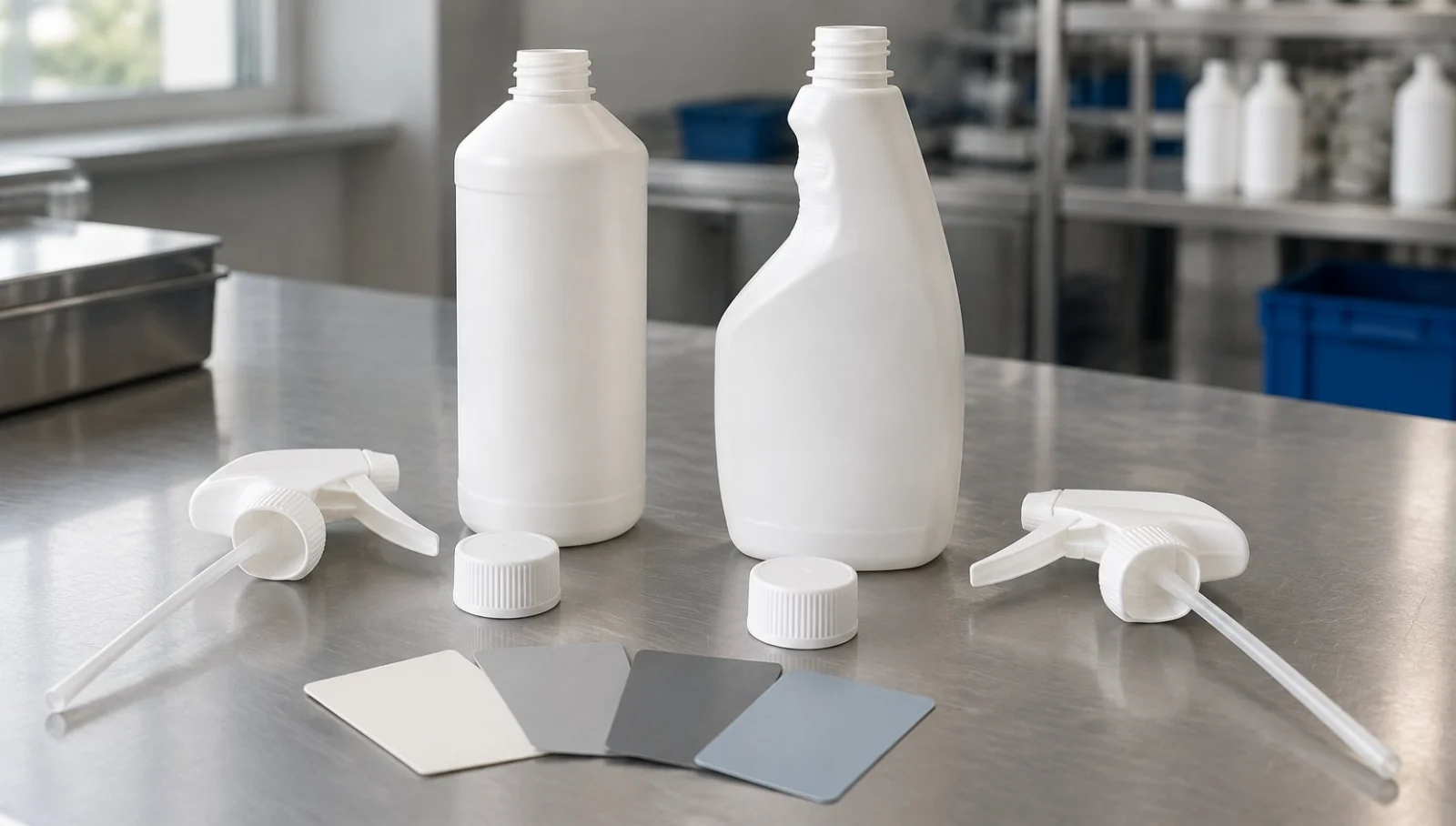
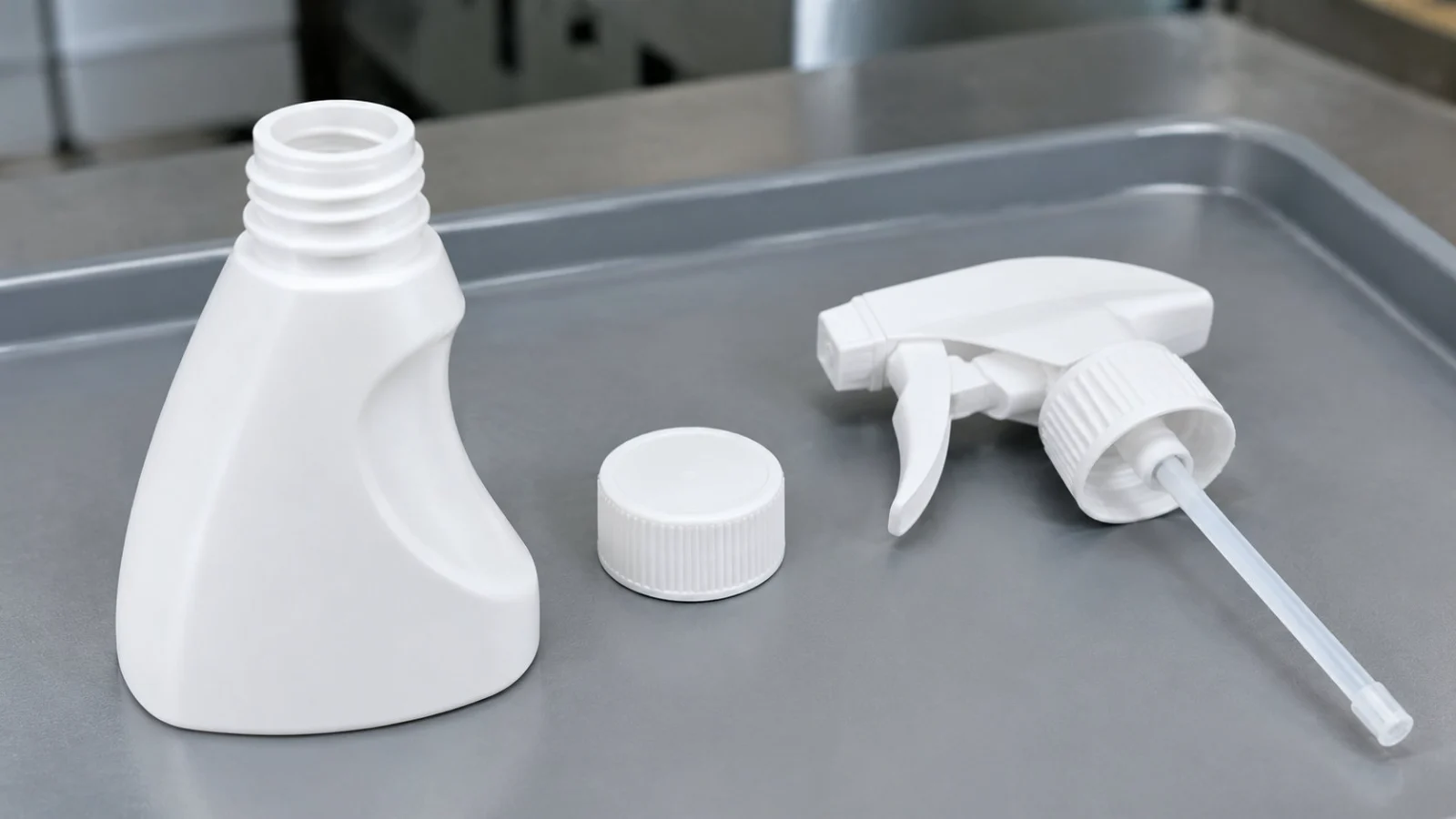
A useful operator detail: a trigger sprayer can look correct on a table and still be wrong for the bottle. The neck finish, dip-tube length and closure fit have to work as a set. A substitution that seems small on a component invoice can create leakage, poor spray performance or assembly problems later.
Record material lot numbers and hold anything that is damaged, unidentified or different from the approved specification until it is reviewed. Do not blend questionable material into a bulk batch simply to keep the line moving.
The practical takeaway: record the lot and disposition of an incoming exception before it reaches the line.
—
Batch records and formula checks for household cleaning products
The practical takeaway: a finished-product test is stronger when it can be traced back to how the batch was made.
For each production batch, the record should show which approved formula and process instructions were used. The level of detail depends on the product, but a buyer should be able to ask for a record that links the finished lot to its material lots and production date.
For a liquid cleaner, agreed in-process or finished checks may include appearance, color, odor, pH, viscosity, fill behavior or a product-specific performance check. Not every indicator applies to every formula, and the test method matters. A pH result from a different dilution or a viscosity reading at a different temperature may not be comparable with the approved reference.

For wipes or tools, different characteristics may matter: sheet or tool dimensions, material weight, sealing condition, count, absorbency or strength. Those checks should come from the product specification rather than a generic checklist copied from another item. Performance criteria also need to fit the SKU: a glass surface cleaner and a kitchen oil cleaner should not inherit the same performance acceptance test by default.
Buyers should also decide when they need to approve changes. If a supplier changes an ingredient source, fragrance, colorant or packaging component, the change may affect appearance, performance or compatibility. The agreement should state which changes require advance notice, a new sample or written approval.
A batch record is not valuable because it is long. It is valuable because someone can use it to answer three questions: what was made, from which lots, and whether the agreed checks passed.
The practical takeaway: define the test method and the change-approval rule alongside the target value.
—
First-off checks when the OEM production line starts
The practical takeaway: approve the line setup before the run builds quantity.
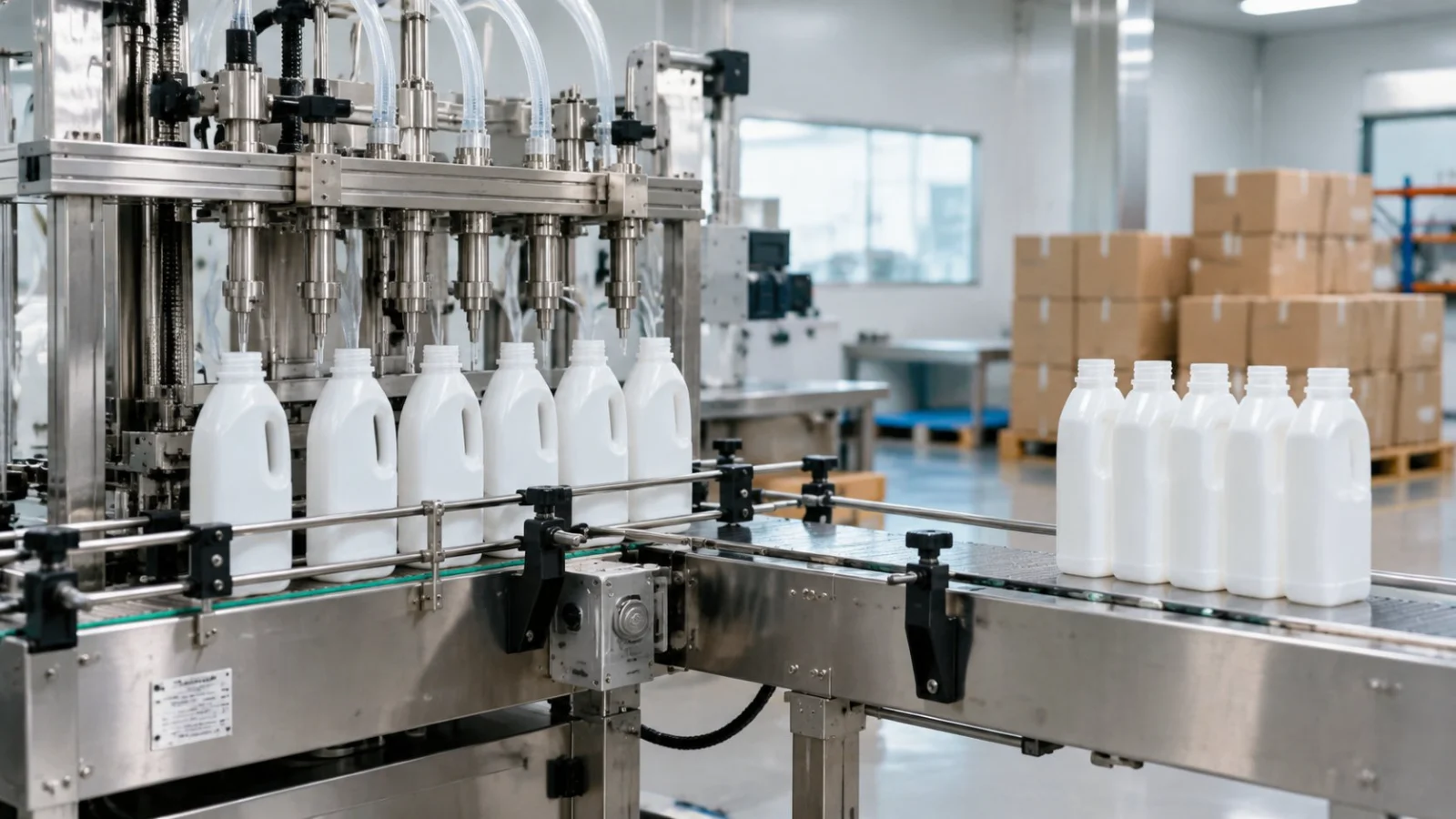
The first units off a line are a useful control point. Before the run continues, compare the first completed product with the approved specification and sample.
For a packaged liquid cleaner, that first-off review can include:
- Correct formula or bulk batch identification
- Fill quantity and container condition
- Closure fit and trigger operation, if used
- Label position, artwork version and readable date or lot code
- Carton configuration and case count
The same check is worth repeating after a material change, line adjustment or artwork-roll change when that change could affect the finished item. This is where a practical failure can hide: the formula is right, but the line still has the previous label roll loaded. If the check happens only at the end of a long run, more units may need to be sorted or reworked.
Agree who signs the first-off sample, where the record is kept and what stops production from continuing if a critical item is wrong. A photo can help with appearance and label position, but it is not a substitute for a physical compatibility or performance check.
The practical takeaway: a quick first-off sign-off can prevent a small setup error becoming a full-lot problem.
—
Packaging checks for cleaning products before shipment
The practical takeaway: treat the bottle, closure, label and carton as part of the product.
Packaging can fail even when the formula is within specification. A closure that loosens, a trigger that leaks, a label that lifts in storage or a carton that cannot protect the pack through the intended route can all create a buyer complaint.
Before production, agree the checks that matter for the selected format. These may include closure fit, leakage under an agreed condition, trigger function, label adhesion, print and barcode verification, case count and carton condition. The actual method and pass criteria should be written down. Avoid vague directions such as “check for leakage” without stating how the sample is prepared and what counts as a failure.
For export packaging, confirm the case configuration and shipping marks against the approved artwork. Ask whether the lot code can be read on both the retail pack and the outer carton, and whether both records point to the same production lot.
Packaging choices also connect to market requirements. Buyers planning a European range should review the component-level and documentation questions in the PPWR packaging compliance guide before the artwork and pack are finalized. For product range decisions, the B2B household cleaning product categories map explains how the category and format can shape the sourcing route.
The practical takeaway: approve the assembled pack, not just each component on its own.
—
Final inspection and sampling for OEM shipments
The practical takeaway: sampling is a decision rule, not a promise that every unit is defect-free.
A final inspection should use a defined lot, a defined sample and agreed acceptance rules. The buyer and manufacturer should agree in advance what counts as a critical, major or minor defect for that product, how the sample is selected, and what happens if the sample fails.
ISO 2859-1:2026 describes acceptance-sampling schemes indexed by AQL for lot-by-lot inspection. It is a reference for setting a sampling plan; it does not mean that every unit has been inspected. Nor should an AQL value be treated as a simple permission to ship a known defect rate. The inspection plan, defect classes and acceptance criteria need to be selected for the product and the commercial risk.
The final review can cover the checks listed in the purchase specification, such as:
- Quantity and lot identification
- Product appearance and package condition
- Correct label and carton artwork version
- Closure, seal or spray function checks where applicable
- Required records and export documents
If the product is high-risk or has a history of repeat defects, the response may need more than a larger sample. It may require a process correction, a targeted check on the affected operation or a pause on release until the cause is understood.
A shipment should have a clear release decision. Agree who can release it, which inspection record supports that decision, and whether the buyer must approve any deviation before goods leave the factory.
The practical takeaway: agree the sampling and release rule before the first shipment, not during a dispute.
—
What happens when a quality check fails
The practical takeaway: a useful control system explains what happens to a failed lot.
A nonconforming result should trigger a documented decision, not an informal promise to “watch it next time.” The lot may need to be held, sorted, reworked, retested, accepted under a written deviation or rejected. The right action depends on the failure and the agreed specification.
For recurring issues, ask for the cause and the corrective action. “Operator error” is not a complete explanation unless the team can show what allowed the error, what was changed and how the change will be checked on the next run.
A practical record should connect the complaint or inspection finding to the production lot, the material lots used, the affected quantity, the disposition and the follow-up verification. Keep the approved sample and relevant test results with the lot record for a retention period agreed by the buyer and manufacturer.
The practical takeaway: close the cause, not only the carton of affected units.
—
How to assess a cleaning product manufacturer’s quality system
The practical takeaway: a management-system certificate and a shipment inspection answer different questions.
A certificate can be one part of supplier due diligence. Check that the legal company name, site address, scope and validity match the manufacturer and facility handling the order. If certification matters to your business, confirm its status with the certification body or an appropriate accreditation source.
ISO 9001:2026, the current edition of the quality management systems requirements, was published on 16 September 2026. Because this edition is recent, ask the supplier and its certification body how the transition applies to that specific certificate. Do not assume that a certificate issued to an earlier edition has already moved to the new one.
Most importantly, do not treat a certificate as proof that a particular batch meets your approved product specification. Ask to see the quality plan for your order, sample records, lot traceability, nonconformance handling and the final release record. ISO 10005:2018 provides guidance on quality plans, but it does not prescribe the buyer’s product-specific acceptance limits.
A factory visit or remote audit can test whether the records match the operation. Follow one finished lot backward: from carton code to filling record, bulk batch and incoming material lots. If the trail stops at a spreadsheet with no link to the production run, ask how the site closes that gap.
The practical takeaway: assess the system, then verify the specific order against its own agreed controls.
—
Buyer checklist for a home care OEM quality plan
The practical takeaway: put the decisions that prevent arguments into the purchase file.
Before confirming a private label or OEM order, make sure the two teams have agreed:
- The approved formula, product sample and packaging reference
- The measurable product characteristics and test methods
- Which ingredient and packaging changes need written approval
- Material-lot identification and required supplier documents
- First-off checks and who signs them
- Packaging function and export-carton checks
- Defect classes, sampling method and acceptance rules
- Final inspection record and shipment-release authority
- How a failed lot, rework or deviation is handled
- Which production and test records are retained, and for how long
Not every household cleaner needs the same test plan. A trigger spray, a concentrated refill and a wipe pack have different failure points. The plan should follow the product, the pack and the buyer’s destination market. Seasonal deadlines do not remove those checks: if production is scheduled before Chinese New Year, leave time for first-off approval, any correction and final release rather than compressing them into the loading window.
The practical takeaway: a short, specific quality plan beats a long checklist no one uses.
—
Cleaning product quality control: common questions
Does ISO 9001 certification guarantee a defect-free shipment?
No. ISO 9001 concerns an organization’s quality management system. It does not replace the product specification, batch checks or agreed inspection and release rules for a particular order.
Should every cleaning product order use the same AQL?
No. The buyer and manufacturer should agree a sampling plan and defect classes that fit the product and risk. ISO 2859-1:2026 provides AQL-indexed sampling schemes, but it is not a substitute for choosing the plan that fits the lot and use case.
What should a private label buyer approve before mass production?
At minimum, approve the product specification and reference sample, formula and pack versions, artwork, test methods, packaging checks and the process for approving changes or deviations.
Which quality records should an importer request?
Ask for the records agreed in the quality plan. Common examples include material-lot identification, batch and in-process checks, first-off approval, final inspection and the lot-release decision. Requirements vary by product and market.
Is an inspection at the factory enough?
It can help, but one inspection is only a snapshot. The buyer still needs a clear specification, traceable lot records and a plan for handling nonconforming results.
The practical takeaway: ask the supplier to show how one actual lot moves from incoming material to release.
—
Working with a home care OEM manufacturer
At BIKI Home Care, we manufacture household cleaning products in Zhongshan, Guangdong, and support OEM and ODM projects from product development through production and export coordination. A quality plan works best when the buyer and manufacturer agree on the reference sample, the critical pack details and the release records before a purchase order reaches the line.
For a new range, that conversation should include product category, intended market, pack format, artwork timing and any test requirements the buyer already knows. The OEM and ODM service overview explains the cooperation models, while the cleaning products factory page introduces the manufacturing site. Buyers comparing liquid and spray formats can also review the liquid cleaner range and spray cleaner range.
Sometimes the right answer is to change the specification or delay the run until a packaging issue is resolved. Better to hear that before production than to discover it after the cartons are on the water.
Have a product idea for your market?
Talk to our team about your next household cleaning project.
—
Sources and standards
These standards are cited as references for the quality-management and sampling points above. The buyer’s approved product specification and purchase agreement still define the checks and acceptance rules for a particular order.
- International Organization for Standardization, ISO 9001:2026, Quality management systems — Requirements. ISO lists this as the current edition, published on 16 September 2026. It is cited here to identify the current quality-management-system standard, not as a cleaning-product test method or proof that a particular supplier holds a certificate.
- International Organization for Standardization, ISO 2859-1:2026, Sampling procedures for inspection by attributes — Part 1: Sampling schemes indexed by AQL for lot-by-lot inspection. Published in January 2026. ISO describes it as a system of acceptance-sampling plans for inspection by attributes. The article refers to that scope only; the parties still need to select and agree the actual plan, defect classes and acceptance rules for the product and lot.
- International Organization for Standardization, ISO 10005:2018, Quality management — Guidelines for quality plans. The ISO abstract says it gives guidance for establishing, reviewing, accepting, applying and revising quality plans, and explicitly says it does not specify requirements. It is a reference for the planning discussion, not a mandatory checklist.