



Chinese New Year 2027 falls on February 6. Ramadan 1448 AH is expected to begin on February 7, or February 8 if the crescent is not sighted on the first evening.
Those two dates sitting next to each other is not a calendar curiosity for a Gulf buyer. It is the tightest sourcing window the household cleaning category has faced in years.
The overlap compresses the entire pre-season build into November and early December 2026. By the time most buyers start asking about Ramadan programs in January, the ships that mattered have already sailed.
—
Why Two Calendars Decide a Cleaning Product Order
A Ramadan program is not a marketing campaign. It is a shipment that has to clear customs and reach a distribution center before a fixed date.
Household cleaning products are heavy, bulky and low in value per kilo. Almost none of them fly. That single fact turns the Islamic lunar calendar into a logistics constraint rather than a merchandising one.
The lunar year runs about eleven days shorter than the Gregorian one, so Ramadan moves earlier each year. In 2026 it began in mid-February. In 2027 it begins in the first week of February. In 2028 it moves into late January.
Each of those shifts pulls the order window back by roughly eleven days, and 2027 is the year that shift lands directly on top of the Chinese New Year shutdown.
Chinese factories do not close for a fixed national holiday the way some Western markets assume. They close for a variable period built around the Spring Festival travel rush, and the length of that closure is decided locally, often late. BIKI Home Care’s planned holiday for 2027 is February 4 to 13.
Read those two blocks of dates together and the problem becomes visible: the factory goes quiet during the first week of Ramadan.
—
The Two Dates: February 6 and February 7 or 8
Chinese New Year is fixed. Ramadan is not, and that difference matters when you are booking production.
Chinese New Year is set by the lunisolar calendar and lands on February 6, 2027. It does not move. Ramadan 1448 AH is set by local moon sighting, and the astronomical new moon falls on February 6, which is why the first fasting day is expected on February 7 or 8 depending on where your market observes.
| Event | 2027 date | How firm is it |
|---|---|---|
| Chinese New Year | February 6 | Fixed by calendar |
| BIKI Home Care holiday period | February 4 to 13 | Planned, confirmed internally |
| Ramadan 1448 AH begins | February 7 or 8 | Expected, subject to local sighting |
| Ramadan ends | March 8 or 9 | Expected, subject to local sighting |
| Eid al-Fitr | March 9 or 10 | Expected, subject to local sighting |
Plan against February 7 and March 8. If the sighting puts the start a day later, you gain a day. If you plan against the later date and it arrives early, you lose one — and you lose it on the wrong side of the window.
The Eid date deserves its own line because it is not the end of the season. It is the second peak.
—
Working Back From the Shelf, Not From the Order
The last practical confirmation date for a Ramadan 2027 program is mid-November 2026, not January.
Most buyers build their timeline forward from the purchase order. The reliable method is to build it backward from the shelf date, because the shelf date is the only date in the chain that is not negotiable.
Retail programs in the Gulf typically want Ramadan stock in store three to four weeks before the first fasting day. That is not a merchandising preference; it is how the pre-season shopping wave works. Households stock up before the month begins, then buy smaller and more often during it.
Working back from a February 7 start:
| Step | Date | Basis |
|---|---|---|
| Stock on shelf | January 10 to 17 | Three to four weeks before Ramadan |
| Arrival at destination port | January 8 to 15 | Allows clearance and inland delivery |
| Vessel sails from South China | December 14 to 21 | 18 to 25 days port to port |
| Production complete | December 10 to 18 | Before the sailing cut-off |
| Order confirmed, standard formats | November 10 to 18 | 30 days from confirmation |
| Order confirmed, custom components | October 20 to 27 | Adds two to three weeks |
Read the last two rows against today’s date. A standard-format program has roughly three weeks of runway left. A program that needs a custom bottle, a custom closure or a new label print run is at the wire now.
Transit times are quoted port to port and vary by carrier, routing and season. The ranges above are planning ranges, not commitments, and they assume no transshipment delay.
—
What the February Shutdown Actually Costs

An order that misses the pre-holiday cut-off does not arrive two weeks late. It arrives after Eid.
This is the part buyers consistently underestimate, and it is worth stating plainly.
If goods are finished and packed by February 3, they can be loaded and sail. If they are not — because a label proof came back late, because a bottle shipment arrived short, because the deposit cleared on the wrong side of a bank holiday — production stops on February 4 and resumes on February 14.
The vessel that would have carried a February 5 booking is gone. The next realistic sailing is late February. Add three to four weeks of transit and the container reaches the Gulf in the second half of March.
Ramadan ends on March 8 or 9. Eid al-Fitr falls on March 9 or 10.
The penalty is not proportional. A two-week slip in production becomes a six-week slip in market, and the entire season is gone. This is the single strongest argument for confirming earlier than feels necessary.
There is a second-order effect that catches distributors. Because every Chinese supplier closes at roughly the same time, the weeks immediately before the holiday are the most congested of the year for booking space and for trucking to port. A booking made in the first week of January is competing with every other order that also decided to squeeze in before the shutdown.
—
Three Moments in the Season, Three Different Packs
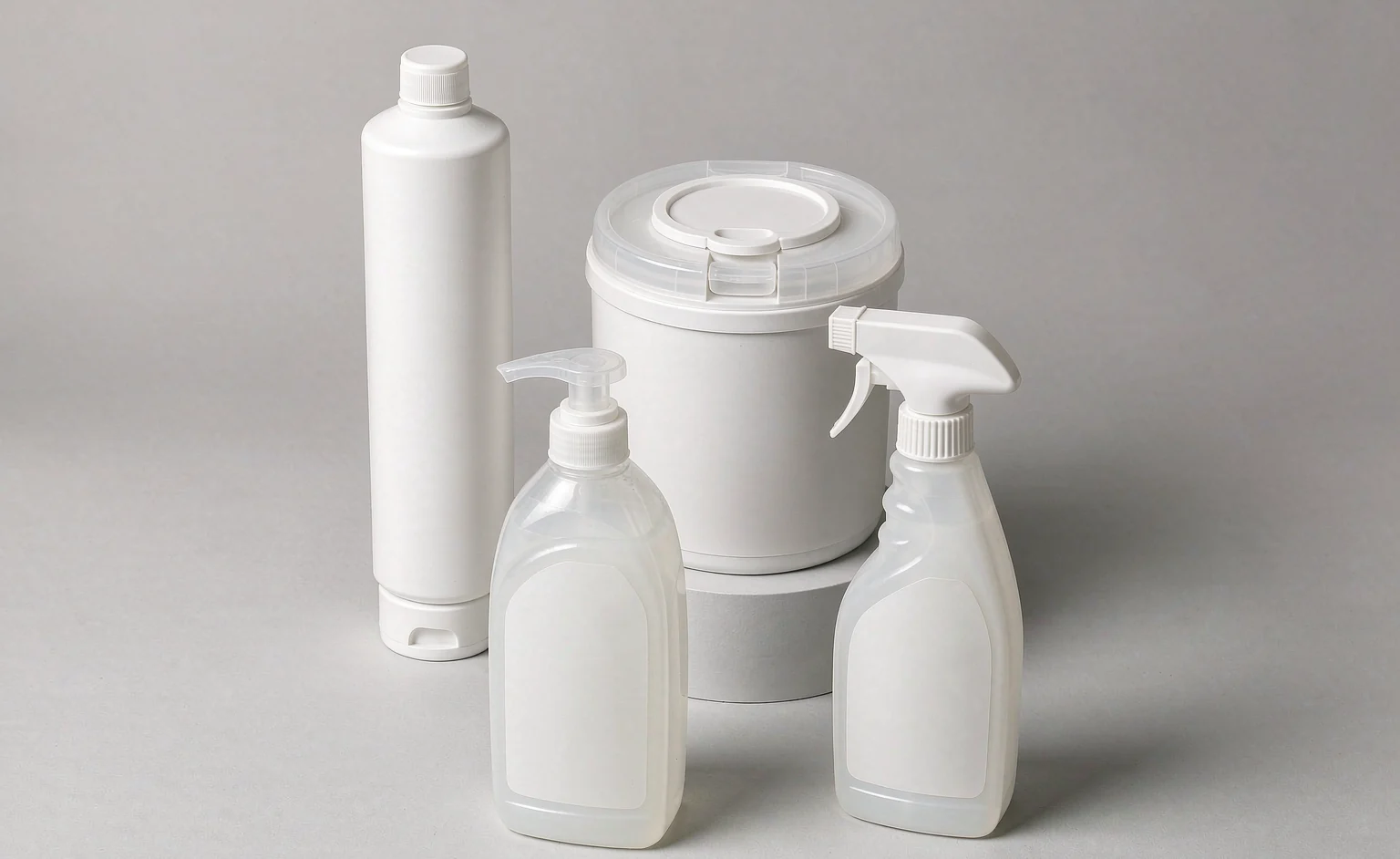
Ramadan does not create one demand spike. It creates three, and each one pulls a different product and a different pack size.
Treating the season as a single order is the most common range-planning mistake. The three moments behave differently.
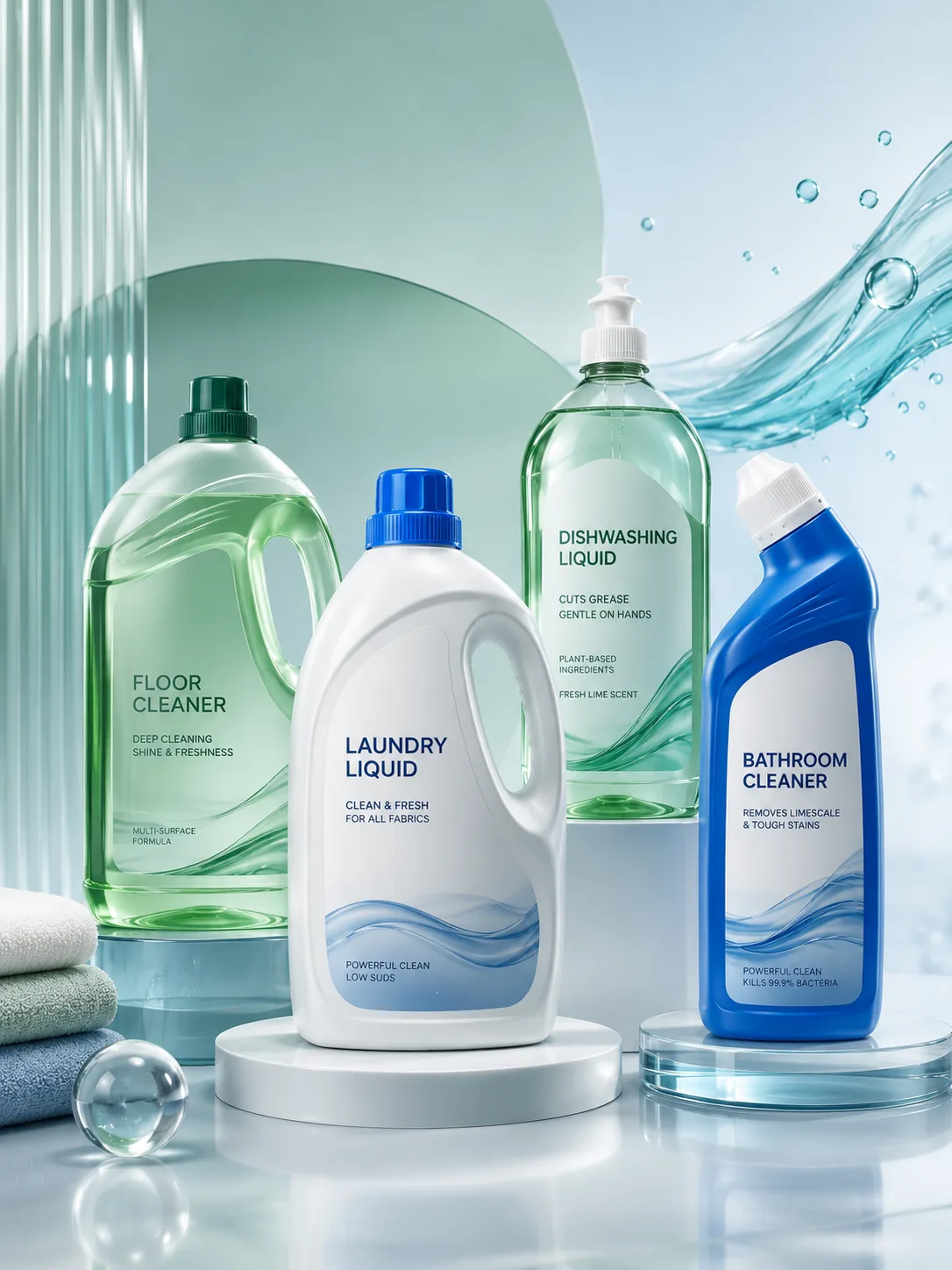
Before the month: the deep clean. Households clean the whole home before Ramadan begins, and this is the heaviest cleaning period of the year. Multi-purpose floor cleaner, toilet cleaning liquid, heavy-duty kitchen oil cleaner and glass surface cleaner all move here, and they move in larger formats. This wave lands in the three to four weeks before the first fasting day, which is exactly the shelf date the timeline above is built around.
During the month: the daily cycle. Fasting changes cooking. Iftar and suhoor produce concentrated, oil-heavy meals prepared on a compressed schedule, and the kitchen becomes the busiest room in the house. Strong degreasing dishwashing liquid and kitchen degreasing wipes carry this period, alongside surface wipes used for fast turnaround between meals and guests. Consumption is daily rather than weekly, so the same household buys more often.
At Eid: the guest season. Visits, gatherings and gifting pull the surface-care end of the range: multi-purpose surface cleaner, glass cleaner, bathroom cleaner and foam hand wash. Wipes do well here for the same reason they do during the month — speed between guests.
The practical consequence for a private label range is that floor care and kitchen degreasing need to be in the first container, not the second. If the range is split across two shipments, sequence it by the three moments rather than by margin.
—
Ports, Transit and the Buffer You Cannot Skip

Plan against 25 days of ocean transit plus a week of clearance, not against the fastest quote you have ever received.
Transit from South China to Jebel Ali is commonly quoted in a range that spans roughly three to four weeks depending on carrier, routing and whether the service is direct or transships through Southeast Asia or the Indian subcontinent.
That range is real, and it is the reason a single number is dangerous. The fast end of the range is what appears in a freight quote. The slow end is what appears in a bad month.
Add to the ocean leg the parts that never appear in a transit time:
- Export clearance at origin and booking cut-off, which can pull the effective sailing date several days earlier than the vessel departure date
- Import clearance and any conformity assessment at destination
- Inland haulage and distribution center receiving appointments
A working buffer of seven days between arrival and shelf date is not conservative. It is the minimum.
Gulf distribution is concentrated around a small number of gateways, and Jebel Ali is the dominant one for re-export across the region. Buyers serving Saudi Arabia, Oman, Qatar, Kuwait and Bahrain often route through it, which means the same arrival window is competing for the same inland capacity.
—
Formats That Fit a Family Gathering
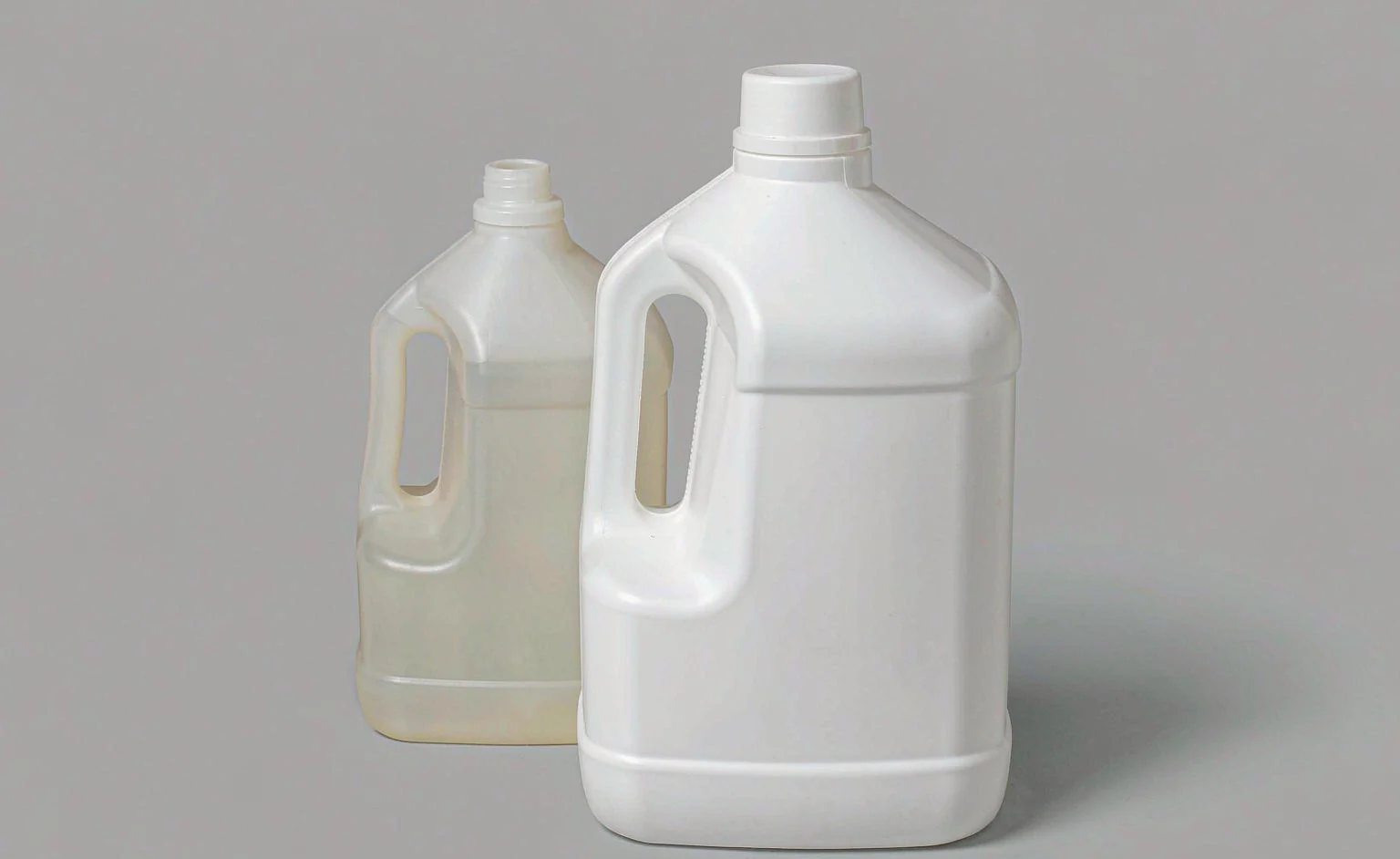
Two pack decisions follow from the season itself: bigger formats for the household, and wipes for the speed.
Ramadan changes household size and household rhythm at the same time. Extended family gathers for iftar, often for many consecutive nights, and the cleaning load per home rises well above the annual average.
That has a direct effect on format. A one-liter floor cleaner sized for a two-person household is the wrong unit for a home hosting fifteen people nightly. Larger formats and refill packs reduce the number of shopping trips during a month when shopping trips compete with everything else.
The second decision is wipes. A canister or soft pack that lets someone wipe a table between guests solves a problem that a spray bottle and a cloth do not, and it is the category that most reliably rides the daily-cycle peak rather than the pre-season peak. The cleaning wipes range splits between canister and soft pack formats, and the two behave differently on cost per wipe — a distinction we set out in the private label cleaning wipes guide.
Neither decision is about price. Both are about matching the pack to how the product is actually used during a specific five-week period. The format also changes what the carton weighs and how many units fit in a container, which is the same variable that decides household cleaning product packaging costs on any other program. In the United States, that weight figure has a second life as well — it is what a state packaging EPR return is calculated from, as we set out in the weight data your supplier has to give you.
Scent is a genuine variable in Gulf markets, and it is the one place where a supplier’s range depth matters more than its price list. Buyers who need a specific fragrance direction should treat that as a development item with its own lead time, not as a line item on a standard order.
—
What to Confirm This Week

Four things decide whether your Ramadan program ships in December or waits until March.
One: which formats are standard and which are custom. Standard bottles and closures can move on a 30-day production cycle. A new bottle, a new closure or a new print run adds two to three weeks before production even starts. Knowing which is which tells you whether your deadline is November or late October.
Two: whether the label artwork is approved or merely designed. Label approval is the most common cause of a December order becoming a February order. Artwork that exists is not artwork that is approved, and the gap between the two is measured in rounds of proof, not days.
Three: which products go in the first container. Sequence by the three moments in the season, not by which SKU has the best margin. Floor care and kitchen degreasing belong in the shipment that arrives first.
Four: what the sailing cut-off actually is, in writing. Ask for the last date goods must be ready to leave the plant to make the intended vessel, and ask what happens to the order if that date is missed. The answer tells you more about a supplier than any lead time quoted in a brochure.
A supplier who cannot answer the fourth question is telling you something useful.
—
Ramadan 2027 sourcing: common questions
When should I place a household cleaning order for Ramadan 2027?
For standard formats, confirm by mid-November 2026. For orders that need a custom bottle, closure or new label print run, late October 2026. The constraint is not production speed but the December sailing window that gets goods on shelf three to four weeks before the first fasting day.
Will my order reach Jebel Ali if my supplier closes for Chinese New Year in early February?
Only if it is finished and packed before the shutdown begins. Goods completed before February 4 can sail. Goods that slip past that date resume production on February 14, which puts arrival in the second half of March — after Ramadan has ended and around Eid al-Fitr.
Which cleaning products sell best during Ramadan and Eid?
The season splits into three waves. Before the month, floor cleaner, bathroom and toilet cleaner, kitchen degreaser and glass cleaner move in larger formats. During the month, degreasing dishwashing liquid, heavy-duty kitchen cleaner and surface wipes carry the daily cycle. At Eid, multi-surface spray, glass cleaner and hand wash follow the guest season.
Can I still add a custom bottle or label for Ramadan 2027?
It is tight. Custom components add two to three weeks ahead of production, which pushes the confirmation date into late October. If the bottle or closure is already tooled and only the label is new, there is more room than if both are new.
What happens if my order is not ready before the February shutdown?
Production resumes on February 14. The realistic next sailing is late February, arriving in the Gulf in the second half of March. That misses Ramadan entirely and lands at Eid al-Fitr, which is a smaller and differently shaped window for household cleaning.
—
Working With a Supplier on a Ramadan Program
At BIKI Home Care, we supply household cleaning products from Zhongshan, Guangdong, and hold the specification for every component in the pack — bottle, closure, label and carton. That is what lets a delivery date be quoted against a real production plan rather than a target.
For a Ramadan program, the useful first conversation is not about price. It is about which formats are standard today, which need development, and what date the goods have to be ready to leave the plant. Those three answers determine whether the season is still available.
If you are building a Gulf program for 2027, the calendar is the brief. Start there.
- Confirm which formats are standard and which need tooling or a new print run
- Confirm the label approval status, not just the label design
- Confirm the sequence of products across containers by season moment
- Confirm the sailing cut-off in writing before placing the order
Request a quote or review our OEM and ODM process to start the conversation. The liquid cleaners range covers the floor, kitchen and dishwashing positions a Ramadan program is built on, and the factory overview sets out the production and quality system behind them.
BIKI Home Care · Zhongshan, Guangdong, China · Household cleaning products for private label, OEM and ODM programs.
—
Sources
Bikihomecare.com, Chinese New Year 2027: When Should You Place Your Household Cleaning Product Orders?. Chinese New Year date and BIKI Home Care’s planned 2027 holiday period of February 4 to 13.
Zakiego Ramadan Calendar, Ramadan 2027 dates and countdown. Ramadan 1448 AH expected to begin February 7, 2027, with Eid al-Fitr on March 9, 2027.
Time and Date, Eid al-Fitr 2027 in the United States. Eid al-Fitr listed as a tentative date of March 10, 2027.
Moonsighting.com, Ramadan and Eid dates. Astronomical new moon calculation for February 2027, used to explain why the first fasting day varies by market.
Assabile, Islamic calendar 2027, Hijri year 1448. Alternative calculation placing the start of Ramadan on February 8, 2027, cited to show the spread between methods.
China Best Freight, Sea freight transit times from China. Port-to-port transit ranges for China to Jebel Ali and other Middle East routes.