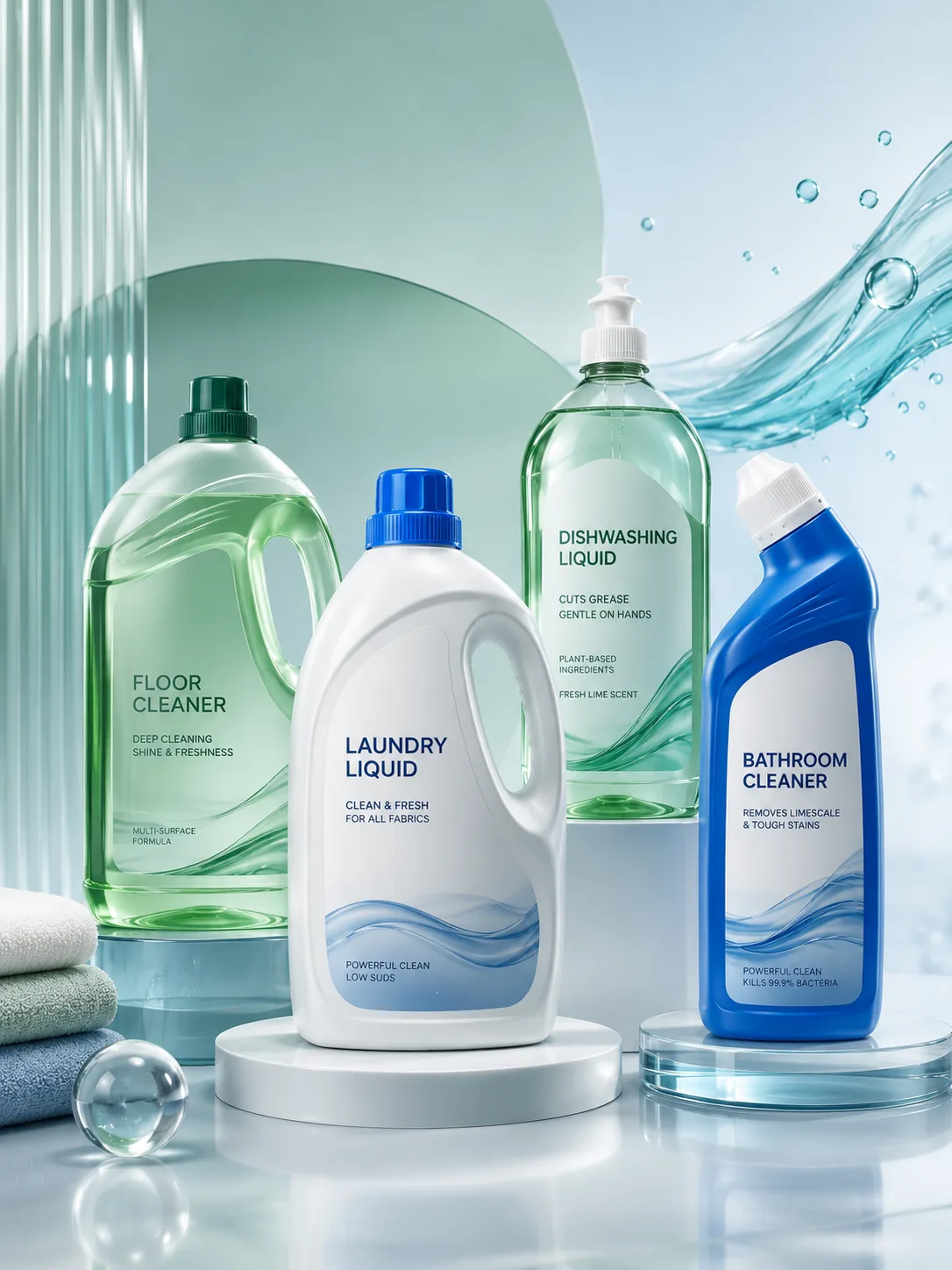
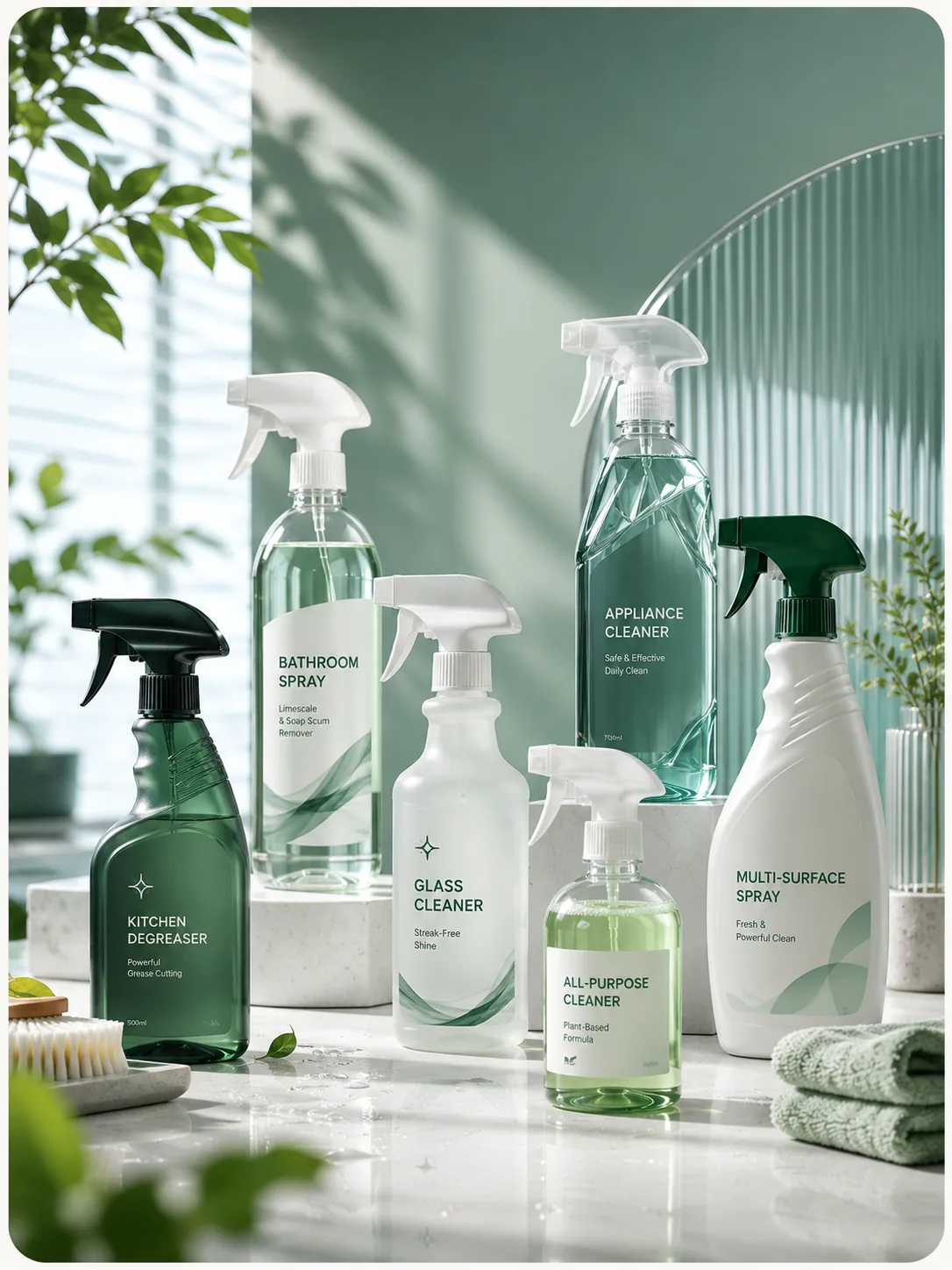
Household cleaning products are changing in small but noticeable ways.
Consumers still want the basics: products that clean well, are easy to use, and are reasonably priced. But the way people choose those products is becoming more complicated. Convenience, fragrance, ingredients, packaging, sustainability and even the way a product fits into a daily routine can influence a purchase.
For importers, distributors and private label brands, this creates an interesting opportunity.
The question is no longer simply, “Which cleaner should we sell?”
It is increasingly about:
What kind of cleaning product will make sense for consumers in our market over the next few years?
Looking at current product development and household cleaning trends, here are seven areas worth watching in 2026.
—
1. Multi-Purpose Cleaners Are Becoming More Practical
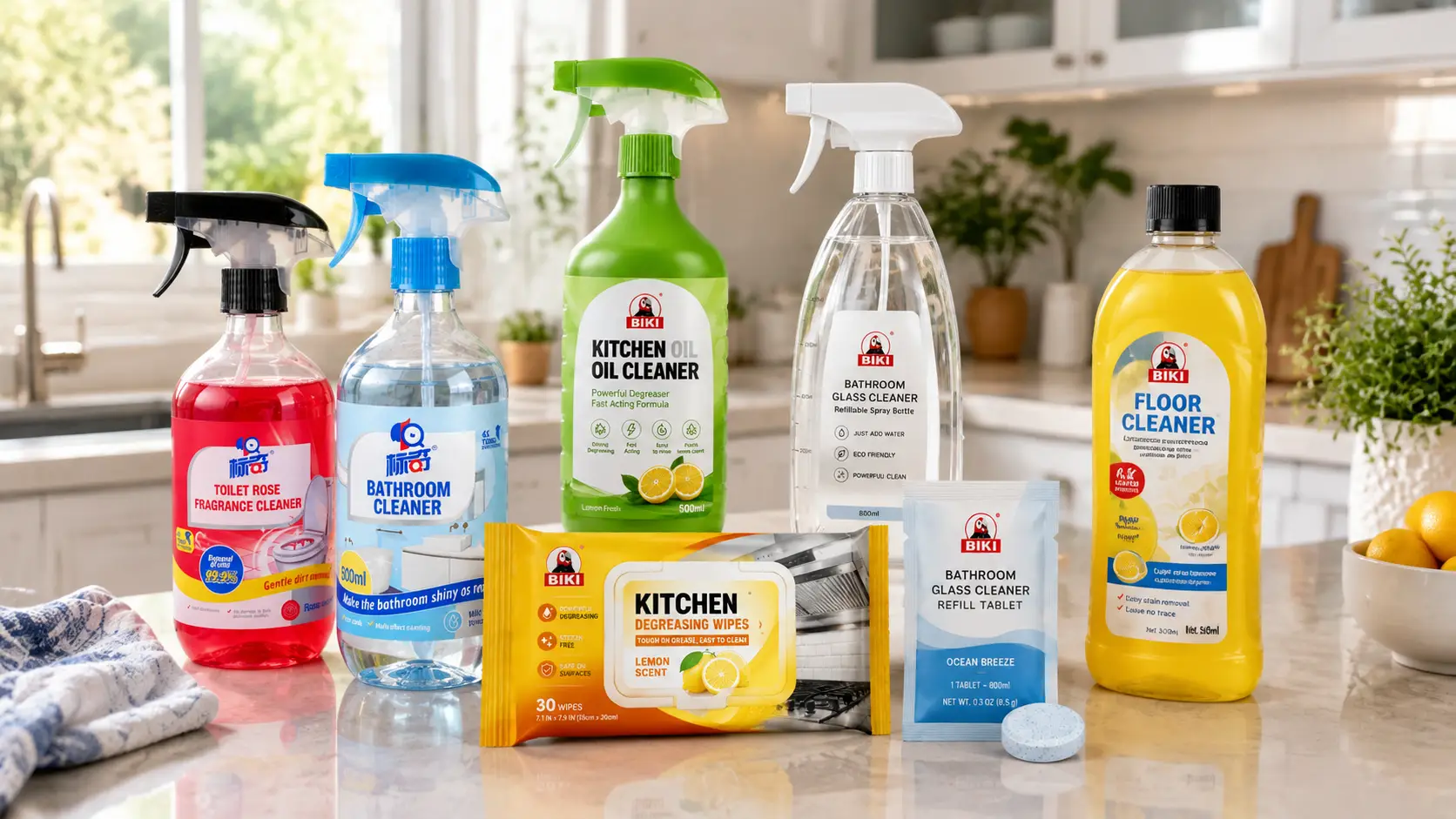
The idea of a multi-purpose cleaner is not new. What is changing is how brands are using it.
Consumers do not necessarily want a bottle that claims to clean everything in the house. They want products that are genuinely useful across several common situations.
A kitchen counter, dining table, cabinet surface or other hard surface may not need a different bottle every time.
This is partly about convenience. A simpler cleaning routine means fewer products to store, fewer decisions to make and less space taken up under the sink.
Current market research also points to convenience and multi-surface cleaning as important areas of household cleaning innovation.
For brands, this does not mean every product should become a “universal cleaner.”
There is still room for specialized products. But a well-designed multi-purpose cleaner can give a private label brand a practical entry point into the category.
For distributors and supermarkets, it can also make product portfolios easier to understand.
The opportunity: Develop multi-purpose products around real everyday cleaning situations rather than simply adding more claims to the label.
—
2. Specialized Cleaners Are Still Important
At first, this may seem to contradict the first trend.
If consumers want fewer products, why are specialized cleaners still relevant?
Because some cleaning problems are genuinely different.
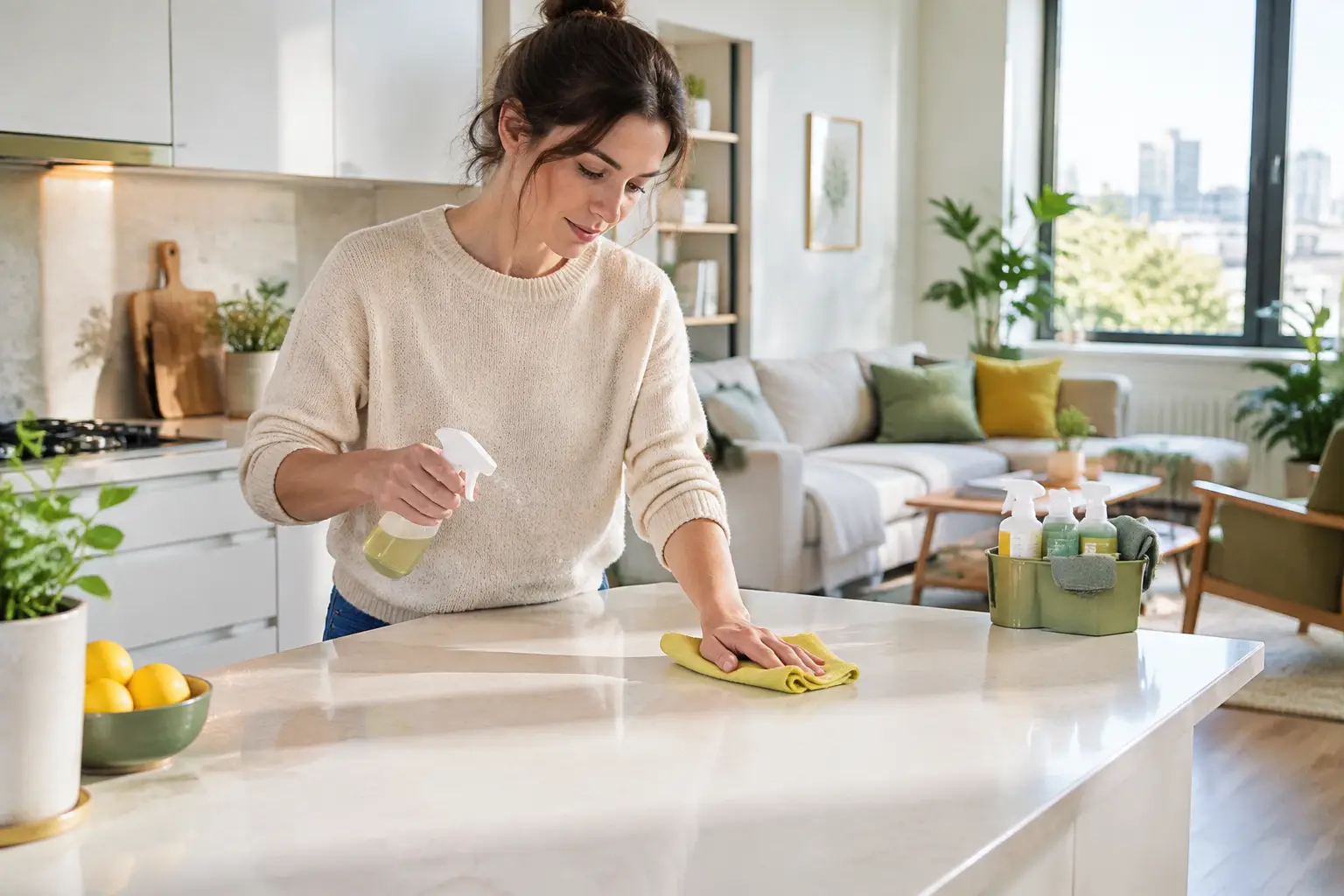
Glass, floors, kitchens, bathrooms, leather and air-conditioning units can require different cleaning approaches. Consumers who care about a particular surface may prefer a product specifically designed for that purpose.
This is particularly important for brands that want to move beyond basic household cleaners.
Instead of competing only on price, a specialized product can focus on a specific problem:
- Removing grease from kitchen surfaces
- Cleaning glass without leaving obvious residue
- Caring for different types of flooring
- Cleaning bathroom surfaces
- Maintaining leather surfaces
- Cleaning air-conditioning filters and components
This creates another way for private label brands to differentiate themselves.
The opportunity is not necessarily to create dozens of products. It is to identify the cleaning problems that matter most in a particular market and build the right products around them.
The opportunity: A smaller, well-planned range of problem-solving cleaners can be more valuable than a large collection of products with overlapping functions.
—
3. Convenience Is Becoming Part of the Product
Cleaning performance will always matter.
But increasingly, consumers also ask a simpler question:
“How much effort does this product save me?”
That question can influence everything from the formula to the bottle.
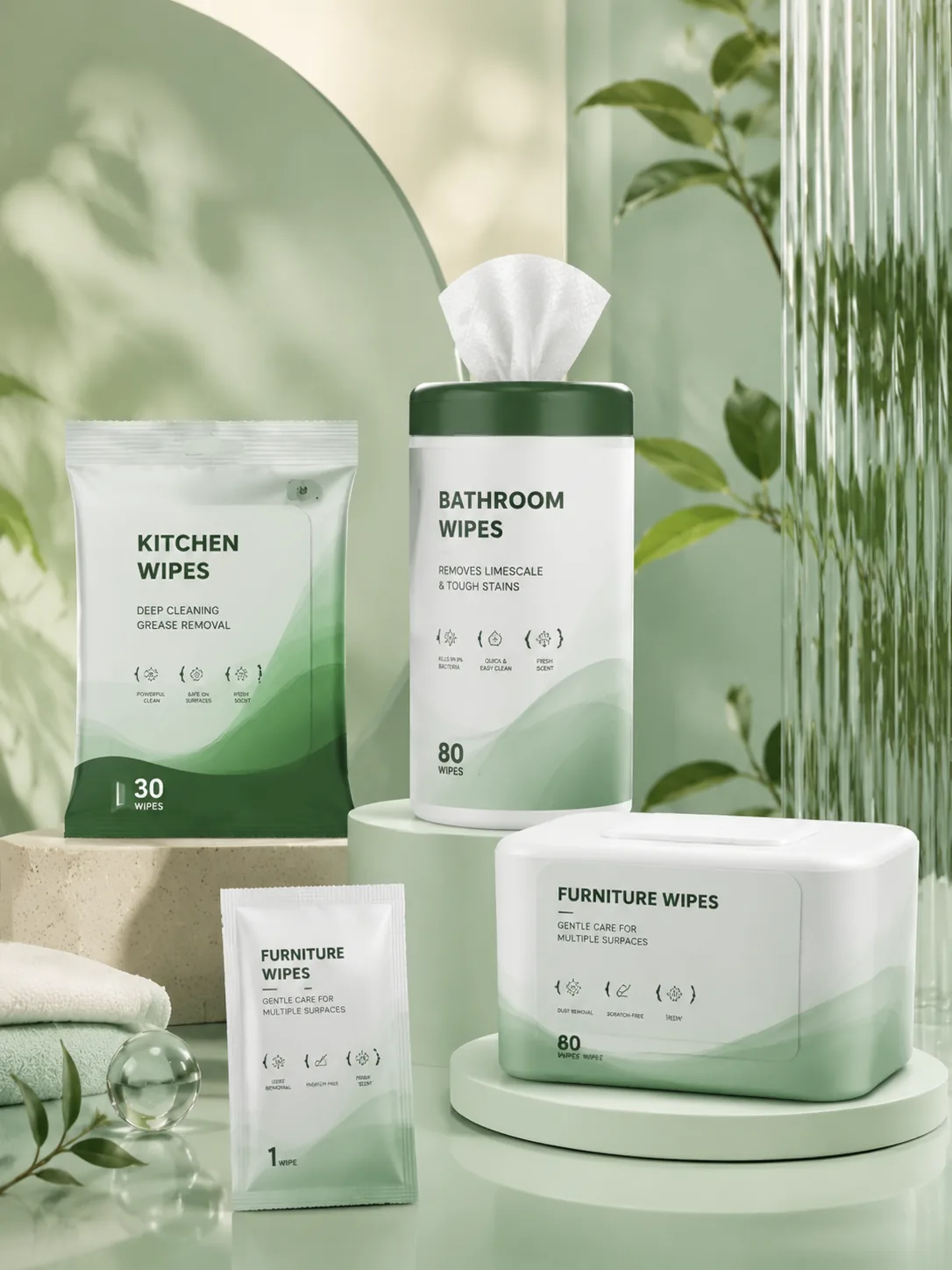
Ready-to-use sprays, easy-pour bottles, compact packaging, cleaning wipes, refill systems and cleaning kits are all different ways of reducing the work involved in cleaning.
The broader household cleaning industry is moving toward lower-effort routines, with convenience and efficiency becoming increasingly important parts of product development.
For a brand, this means convenience should not be treated only as a marketing word.
It can be designed into the product itself.
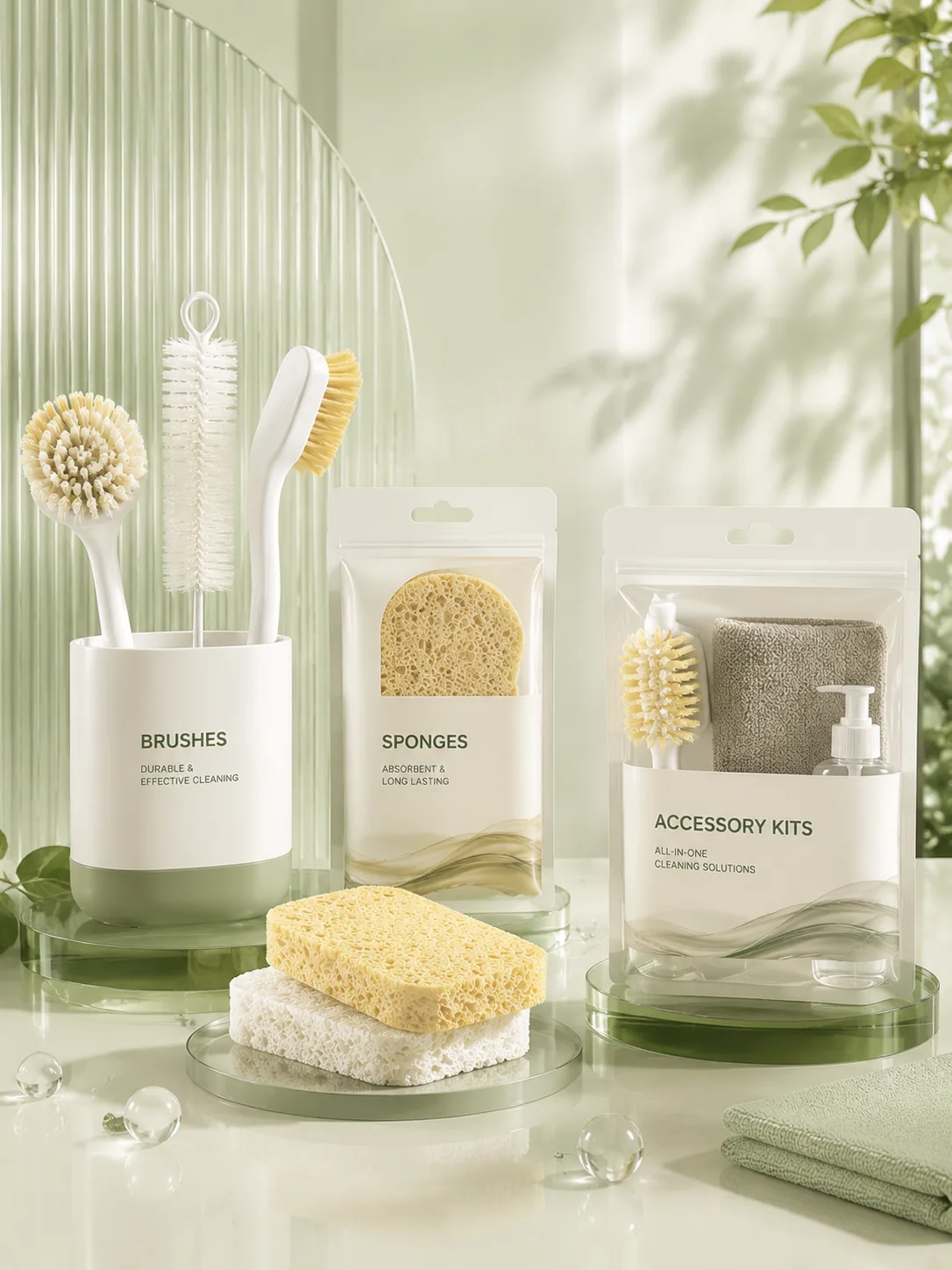
A trigger spray may be easier for quick daily cleaning than a traditional bottle. A concentrated formula may reduce the amount of product that needs to be transported. A cleaning kit can combine a liquid formula with the brush, sponge or cloth needed for a particular task.
These are relatively simple ideas, but they can make a product feel much more relevant to modern consumers.
The opportunity: Look at the entire cleaning experience, not just the liquid inside the bottle.
—
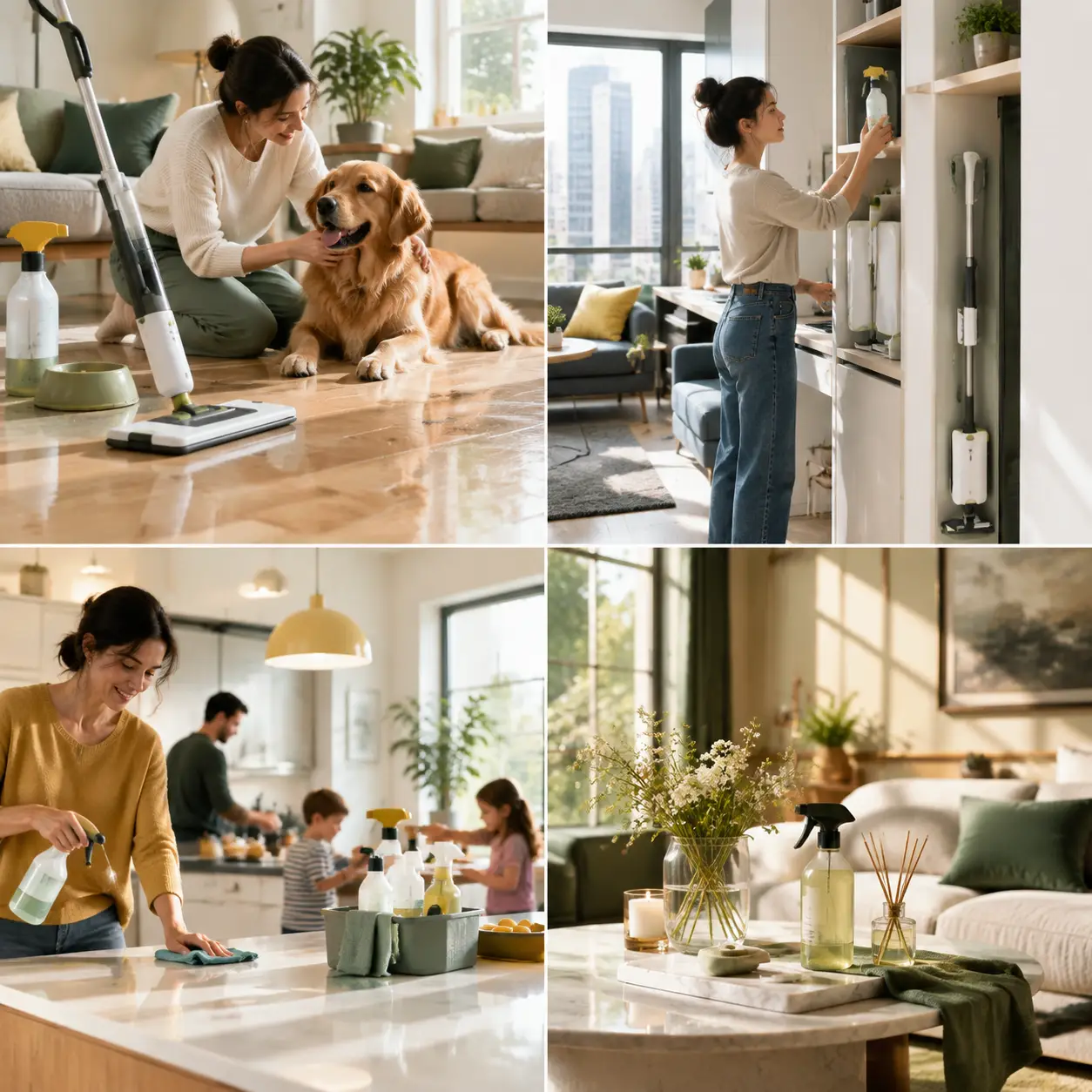
4. Fragrance Is Becoming Part of the Cleaning Experience
Cleaning products have traditionally been associated with one basic idea:
Clean should smell clean.
That is still true, but fragrance is becoming more interesting.
Consumers can now find cleaning products with a much wider range of scent profiles, from familiar lemon and floral fragrances to fresh, botanical, fruity and more distinctive scent combinations.
Industry trend research for 2026 also highlights fragrance-led cleaning and the connection between household care and sensory experiences.
This matters because fragrance can help a product feel different even when its basic cleaning function is similar to competing products.
For private label brands, that can be useful.
A distributor may not be able to completely reinvent a floor cleaner. But choosing a different fragrance, packaging direction and target consumer can create a product that feels more distinctive.
For example, a basic floor cleaner could be positioned around:
- Fresh and clean
- Lemon
- Floral
- Ocean
- Citrus
- Botanical
- Premium fragrance
The important point is not simply to make a stronger-smelling product.
The fragrance should fit the product, the market and the positioning of the brand.
The opportunity: Fragrance can become part of product differentiation rather than an afterthought added at the end of development.
—
5. Eco-Friendly and Bio-Based Formulas Are Moving Into the Mainstream
Sustainability is no longer limited to a small group of specialist cleaning brands.
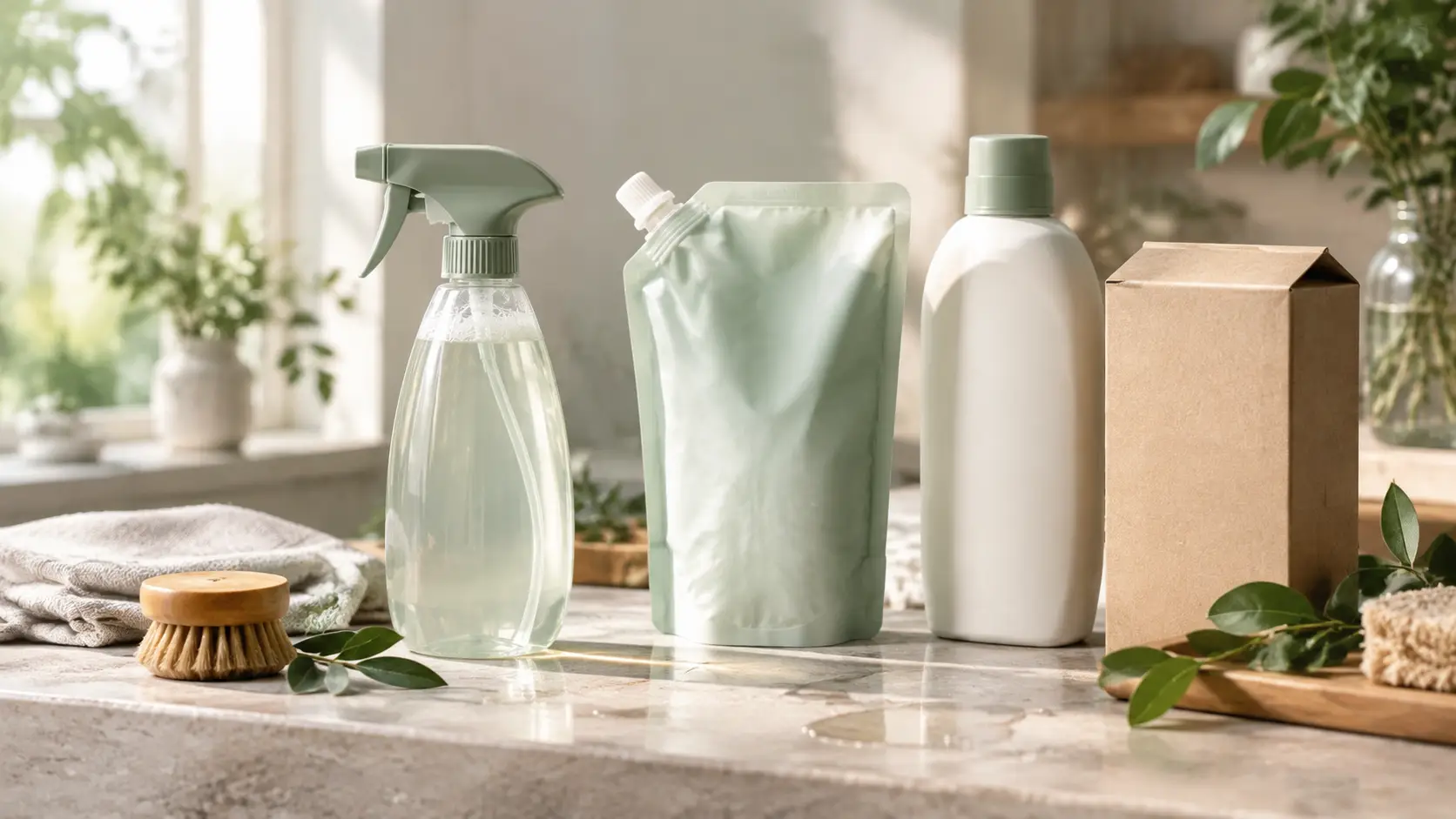
Consumers are paying more attention to ingredients, packaging and how products are made. At the same time, manufacturers are exploring bio-based ingredients, plant-derived materials, biodegradable formulas and other alternatives to traditional approaches.
The 2026 household cleaning trend landscape shows continued interest in bio-based and probiotic cleaning, while market research also points to growth in natural and organic cleaning products.
However, there is an important difference between having an “eco” label and developing a genuinely more thoughtful product.
Sustainability can involve many parts of the product:
Formula → Packaging → Concentration → Transportation → Refill system → End use
For example, a concentrated product may allow a brand to rethink both packaging size and transportation volume. A refill system may reduce the need to replace the main bottle every time.
This is why sustainability should be considered during product development rather than added as a marketing message after the product is finished.
The opportunity: Brands that can combine cleaning performance with credible sustainability choices may have more room to build long-term product lines.
—
6. Refill and Concentrated Products Deserve More Attention
Refill products and concentrated formulas are not completely new ideas, but they are becoming more interesting as brands look for ways to reduce packaging and create different purchasing models.
The basic idea is straightforward.
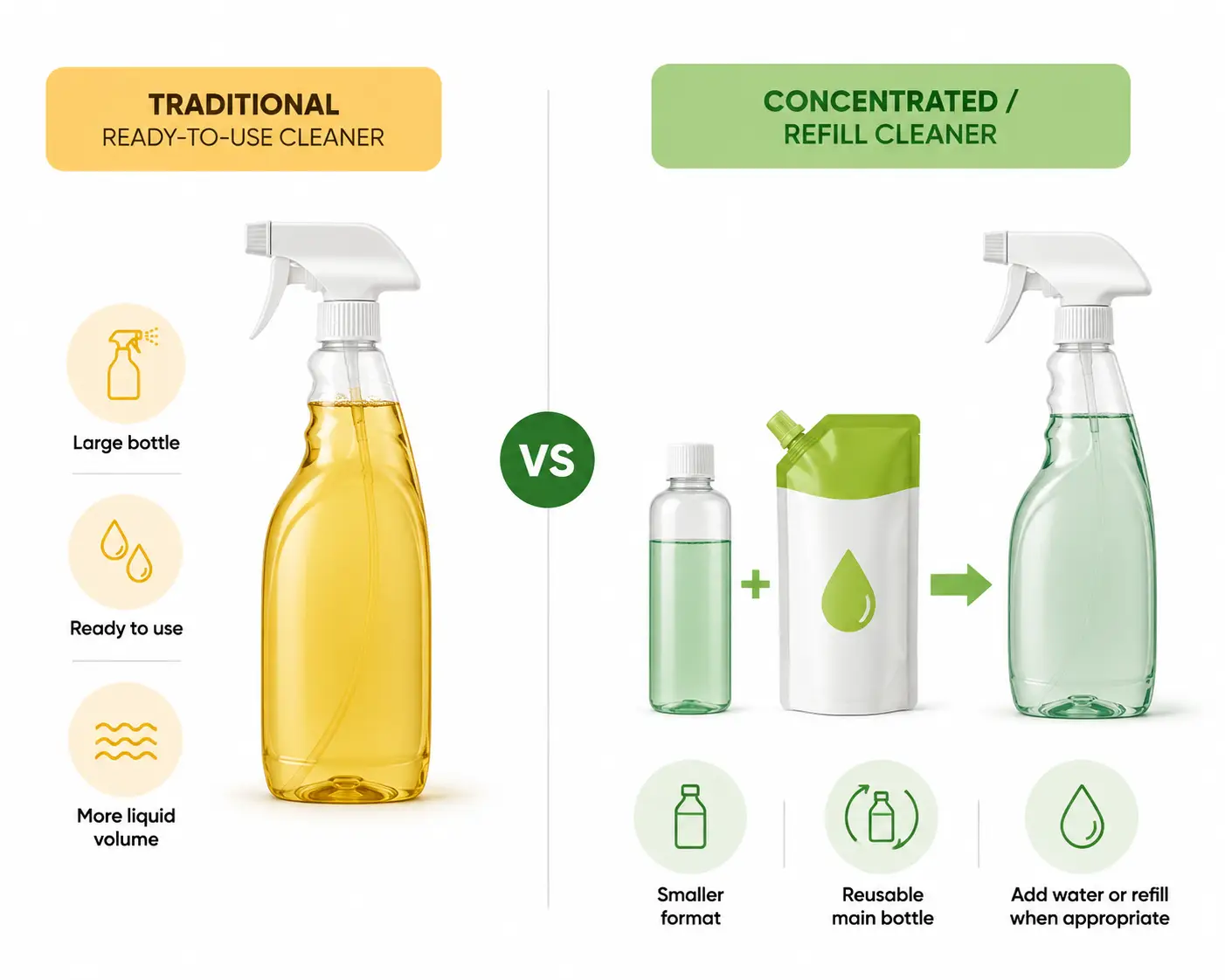
Instead of repeatedly buying a large bottle of ready-to-use liquid, a consumer may purchase a refill or concentrated product and reuse the main container.
This can change the economics of the product as well.
Smaller packages can potentially reduce packaging material and shipping volume. Refill programs can also create opportunities for repeat purchases.
Online retail is particularly interesting here because consumers can easily understand a refill system after the first purchase and reorder the same product later. Current market research shows online retail continuing to gain importance in household cleaning, including refill and subscription-style purchasing.
That does not mean every cleaning product needs to become concentrated.
Some consumers still prefer the simplicity of opening a bottle and using it immediately.
The better approach is to match the format to the market.
The opportunity: Refill and concentrated products can create new product lines while giving brands another way to think about packaging, logistics and repeat purchasing.
—
7. Cleaning Products Are Becoming More Lifestyle-Specific
Perhaps the most interesting change is that household cleaning is becoming less about selling a generic “cleaner” and more about solving a particular problem.
Think about the difference between:
“Glass Cleaner”
and:
“Fast-Drying Glass Cleaner for Everyday Home Use.”
Or between:
“Floor Cleaner”
and:
“Low-Foam Floor Cleaner for Tile, Wood and PVC Floors.”
The second approach starts with the user's situation.
This kind of thinking can also lead to products designed around specific lifestyles.
Pet owners may look for products designed around homes with pets.
Busy families may prefer quick, ready-to-use cleaning formats.
People living in smaller apartments may value compact products and multi-purpose solutions.
Consumers who care about interior design may pay more attention to packaging and fragrance.
This is where product development becomes more interesting.
The formula is important, but so are the target user, cleaning scenario, packaging, fragrance and product story.
The opportunity: Instead of asking “What cleaner can we manufacture?”, brands can start by asking “What cleaning problem can we solve better?”
—
What Do These Trends Mean for Private Label Brands?
These trends do not mean that every brand needs seven completely new products.
In fact, that may be the wrong approach.
A better strategy is to look at an existing product portfolio and ask where there is room to improve.
Could a floor cleaner have a more distinctive fragrance?
Could a multi-purpose cleaner replace several low-performing SKUs?
Could a traditional cleaner be redesigned into a more convenient spray?
Could a product be offered in a refill or concentrated format?
Could the packaging better communicate the product's target use?
Could a specialized cleaner solve a problem that competitors are currently ignoring?
Small changes can sometimes create a much stronger product proposition than simply adding another SKU.
For importers and distributors, this also makes product selection more strategic.
Instead of buying a collection of unrelated cleaning products, a brand can build a portfolio around a few clear consumer needs.
—
From Market Trends to Product Development

Following trends is easy.
Turning a trend into a product that can actually be manufactured, shipped and sold is much harder.
A new fragrance needs to work with the formula.
A new bottle needs to be practical for production and filling.
A concentrated product needs the right formulation and usage instructions.
A refill concept needs suitable packaging.
A specialized cleaner needs to deliver the performance expected by its target market.
This is where the relationship between product development and manufacturing becomes important.
At BIKI Home Care, we combine household cleaning product development with manufacturing capabilities covering bottle production, formula preparation, fragrance customization, filling, packaging and logistics.
Our experience in China's domestic e-commerce market has also given us a practical view of how cleaning products are presented, tested and purchased by consumers. That experience is set out in what e-commerce can teach us about the next generation of household cleaning products.
For international buyers, this combination can be useful when moving from an initial product idea to a scalable OEM or ODM product.
The goal is not simply to follow every trend.
It is to identify the trends that make sense for your market and turn them into products that consumers can actually use.
—
Looking Ahead
The household cleaning market in 2026 is not moving in only one direction.
Consumers want convenience, but they still care about performance.
They may want fewer products, while still looking for specialized solutions.
They may care about sustainability, but they also expect reasonable prices.
And while cleaning is still a functional part of everyday life, fragrance, packaging and product experience are becoming more important.
For importers, wholesalers, distributors and private label brands, this creates plenty of room for new ideas.
The most successful products may not necessarily be the most complicated ones.
Sometimes, the better opportunity is a familiar cleaning product redesigned around a clearer problem, a better experience or a more specific market.
Market trends are only useful when they can be turned into products.
If you are planning a new household cleaning product line, BIKI Home Care can support OEM, ODM and ready-to-order product development for different markets.
Have a product idea for your market?
Talk to our team about your next household cleaning project.